PIXSO · DESIGN THE EXPERIENCE
UX design tool for user flows and prototypes
Explore ideas on a whiteboard, turn screens into interactive prototypes, and keep feedback beside the design. Give your team something they can see and try before committing to development.
Plan in Pixso Whiteboard. Design, prototype and review screens in a design file.
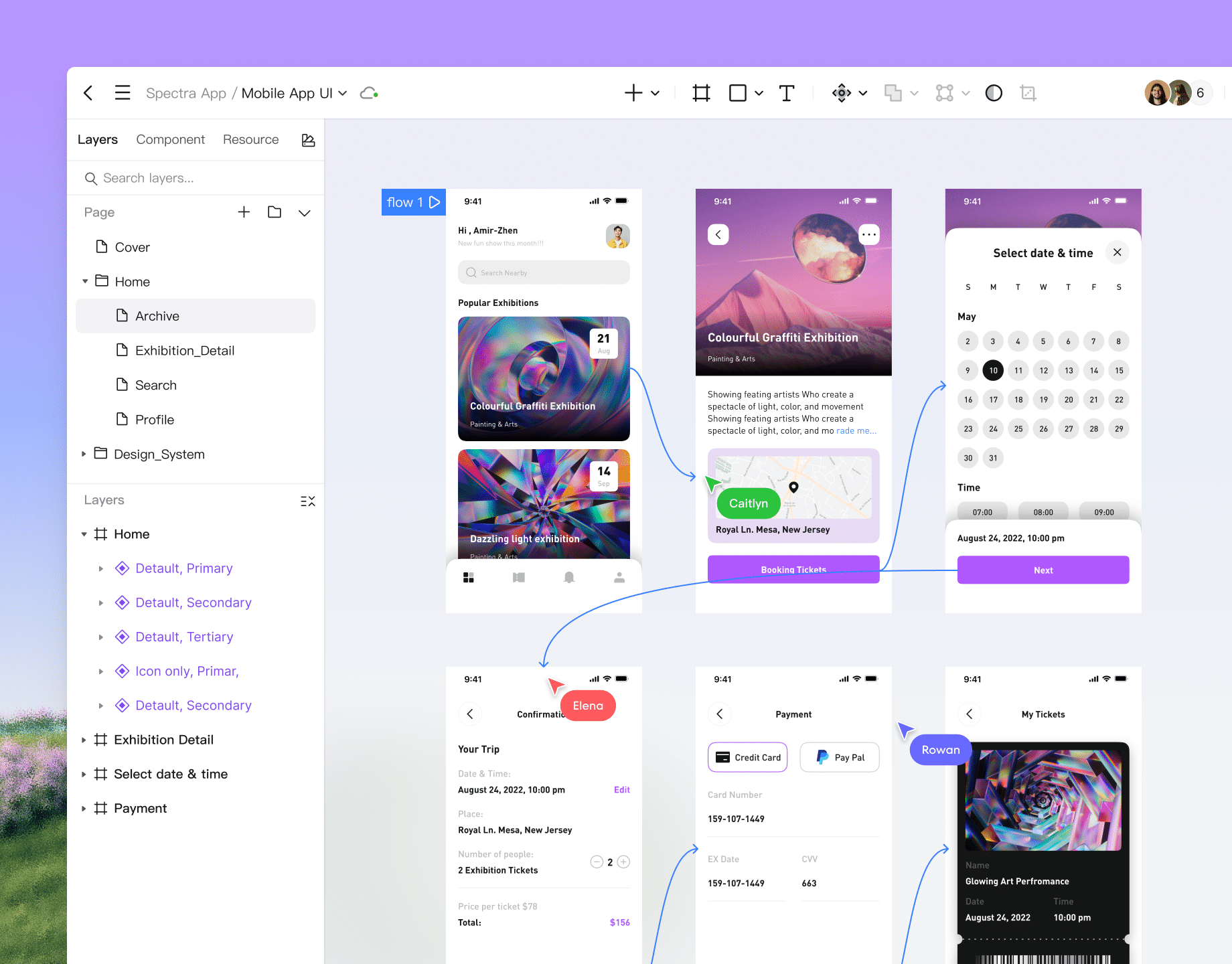
Watch the interaction demo
01 · VISUAL PLANNING
Make complex journeys easier to discuss
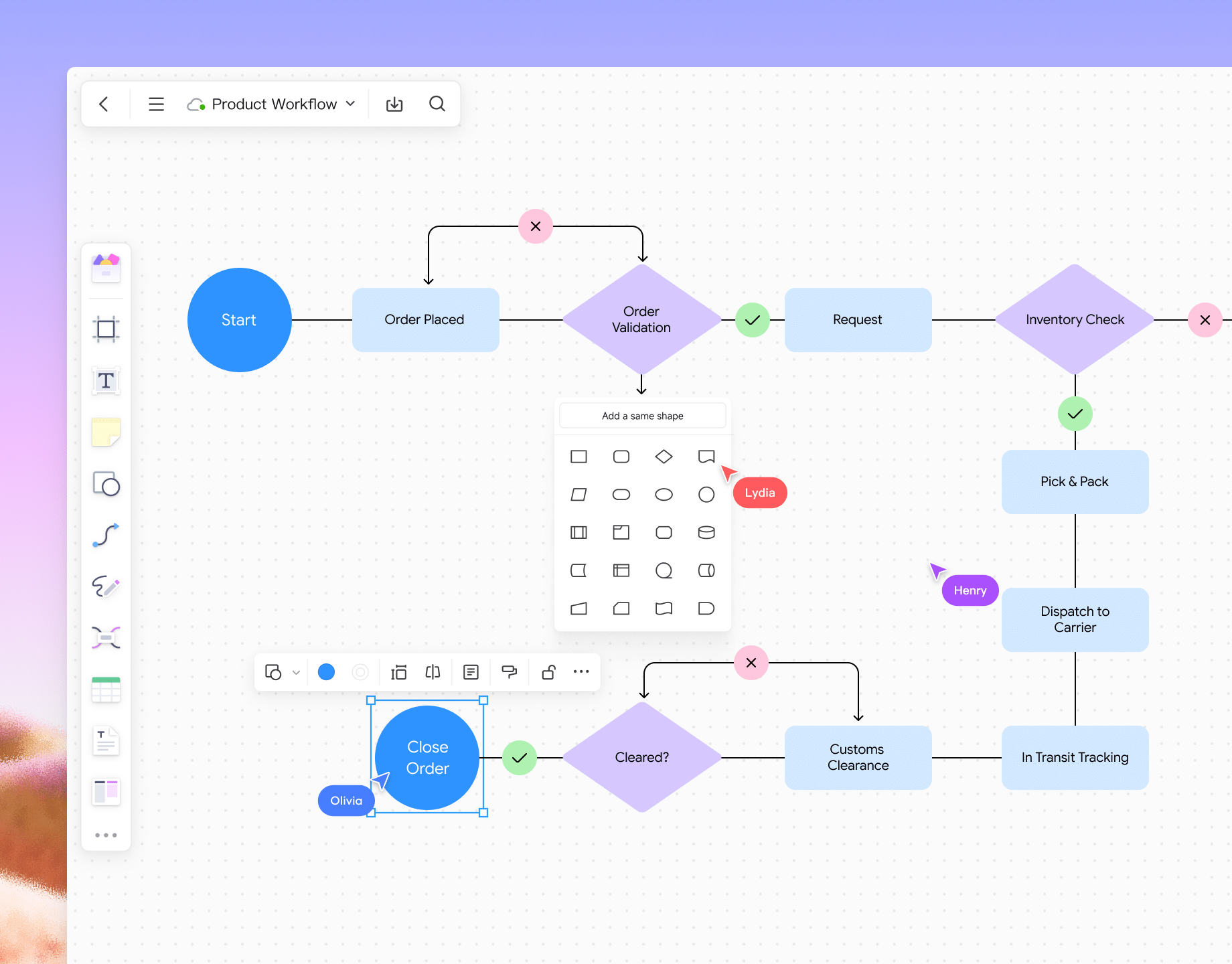
Pixso Whiteboard puts steps, decisions and supporting notes on a shared visual canvas. Your team can examine the main route and its alternatives before investing in detailed screens.
Connections that stay with your ideas
Connect shapes and notes with arrows and labeled lines. Connections follow their objects when you rearrange the board, making it easier to revise a branching flow as requirements change.
Keep the reason beside the route
Place research notes and product requirements next to the steps they inform. Designers and stakeholders can discuss the same visual context, including missing information, cancellations and recovery paths.
02 · EDITABLE WIREFRAMES
Explore screen structure without starting over
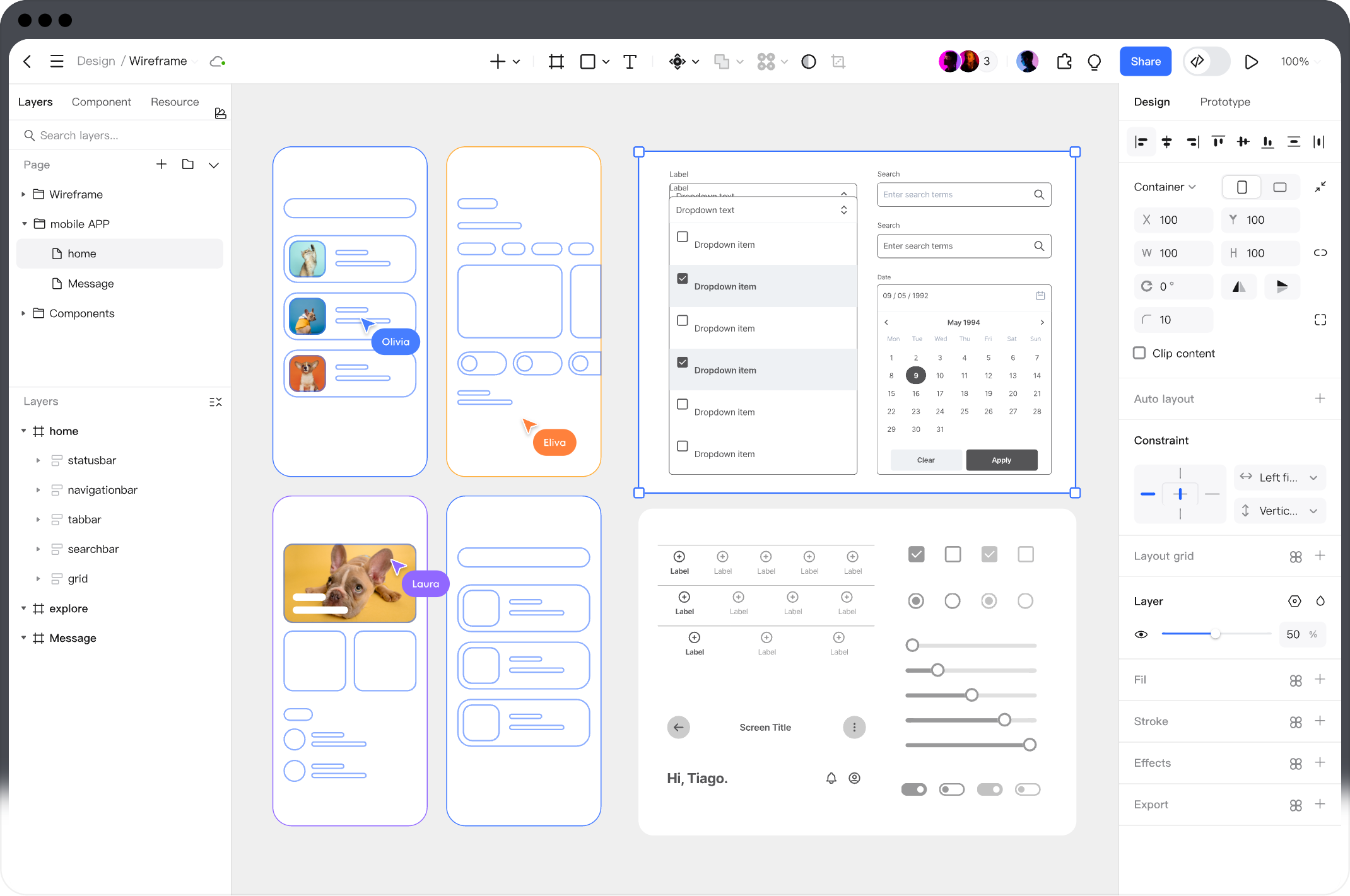
Build wireframes with editable frames, text and shapes in Pixso’s design editor. Compare layouts while they are easy to change, then add visual detail to the same screens as the direction becomes clearer.
Change the layout, keep the work
Adjust content, controls and hierarchy as editable layers. A form, navigation pattern or empty state remains part of the design you can refine, rather than a flat image that must be recreated.
Move into UI design when you are ready
Bring components, typography and visual states into the design file as you refine the experience. Screens can stay simple for an early review or become detailed enough to discuss the finished interface.
03 · INTERACTIVE REVIEW
Show the experience, not just the screens
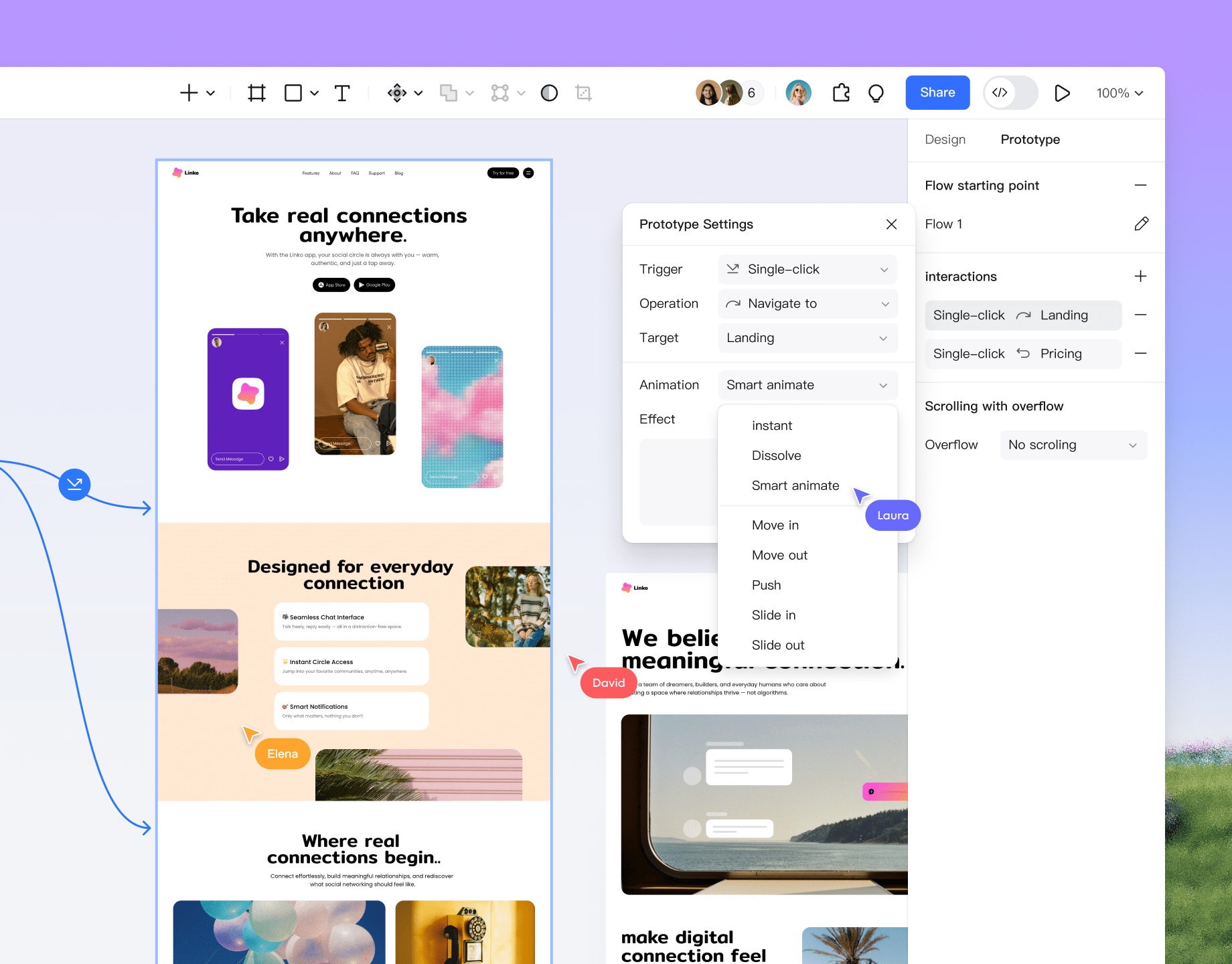
Turn screens in your design file into an interactive prototype. Navigation, overlays and transitions let teammates try the proposed behavior instead of having to imagine it from static mockups.
Make the important interactions visible
Connect a trigger to an action and destination. Click, hover, drag and delay options help demonstrate how a screen responds, while transitions show how one state leads to the next.
Share a clear starting point
Set a flow’s starting frame and share the prototype for browser playback. Reviewers can follow the same entry point and discuss where navigation, feedback or recovery needs to change before development.
04 · TEAM FEEDBACK
Keep every comment connected to its context
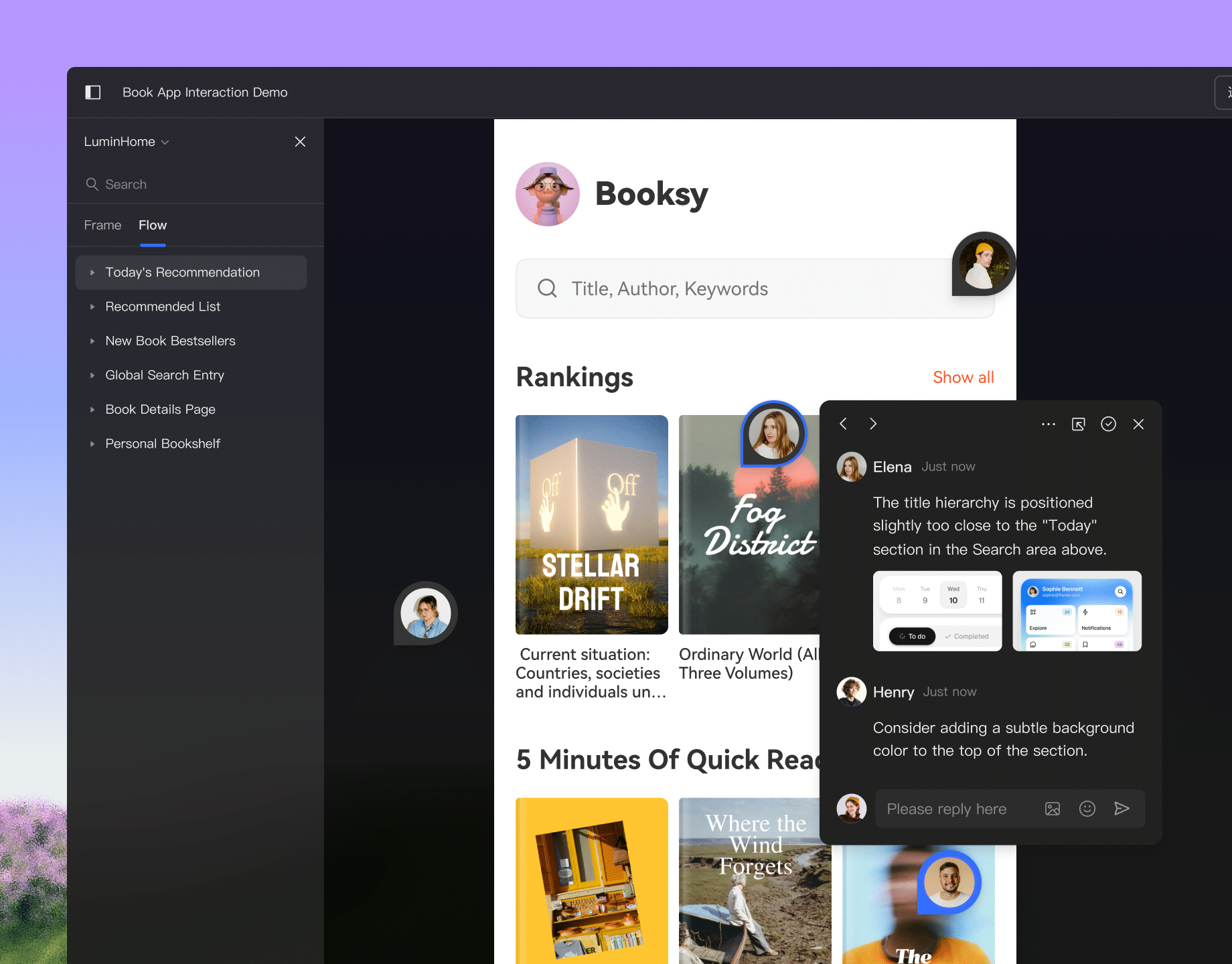
Pin feedback to the screen or region it concerns. Replies, mentions and resolved threads keep design discussions close to the work, so the team does not have to match separate messages with screenshots.
Know what needs attention
A comment’s position identifies the design detail under discussion. Teammates can reply in the same thread and mark it resolved after the question is addressed, separating open feedback from finished discussions.
Stay in control of the review
Share viewing or editing access for each collaborator’s role. Named versions provide reference points at review milestones; version availability and retention depend on the plan.
WHERE PIXSO FITS
A UX workspace for the decisions your team needs to make
From an early concept to an existing product, combine visual planning with editable screens and interactive review. Choose the level of detail that makes the next decision easier.
New app and website concepts
Explore the journey on a whiteboard, then build a small set of wireframes in a design file. A clickable prototype gives stakeholders a concrete way to discuss the idea before the team commits to detailed UI.
Complex service and approval flows
Use labeled branches to clarify decisions, then model the relevant screens and states in a prototype. Teams can review how a task continues after a missing field, cancellation or returned request.
Improvements to an existing product
Work with editable screens, connect a proposed change into a flow, and collect comments at the affected locations. Keep named versions as review reference points while the design evolves.
BUILD ON THE WORK YOU HAVE
Keep moving when the UX direction is clear
Refine the UI in the same design file
Use components, Auto Layout and text and color styles to develop the approved screen structure. Your wireframes can become detailed interfaces without recreating them in a separate drawing tool.
Explore UI design in PixsoGive developers the design context
Share screens and prototype entry points alongside their discussion. Developers with the appropriate access can inspect dimensions, spacing, typography and exportable assets in the design file.
Review sharing and permissionsContinue an existing project
Import supported Figma, Sketch or Adobe XD files and keep working with editable layers. Check fonts, components and prototype connections after import before using the flow in a review.
See supported file importsChoosing Pixso for UX design
What makes Pixso useful for UX design?
Do Whiteboard and the design editor use the same file?
Can I use a Pixso prototype for a usability session?
Can my team start for free?
Make your next UX decision with a prototype you can try
Editable screens, interactive review and feedback in context. Start designing in Pixso.
Start designing for free