Scott
Wireframes answer one practical question: can someone understand the page structure and move through the key task before the team spends time on visual polish? The right tool depends on the fidelity you need, how the team reviews work, and what must be handed to development.
Choose a wireframe tool with one benchmark task
A fair comparison starts with the same task in every tool. Recreate one short flow—such as inviting a teammate, filtering a table, or recovering from an error—then record how quickly the team can move from structure to review. Check whether the file keeps layout decisions, component states, comments, and handoff notes together. This is more useful than counting isolated features because the decision is about a repeatable workflow, not a feature list.
- Structure: can the team sketch the task without visual noise?
- Interaction: can the prototype show the decisions that matter?
- Review: can reviewers leave context-rich feedback on the same file?
- Handoff: can developers inspect the approved state without guessing?
This comparison uses the same criteria for every option: low-fidelity speed, interaction depth, collaboration, platform fit, export and handoff, and the effort needed to keep decisions traceable. “Best” means best for a workflow, not a universal ranking.
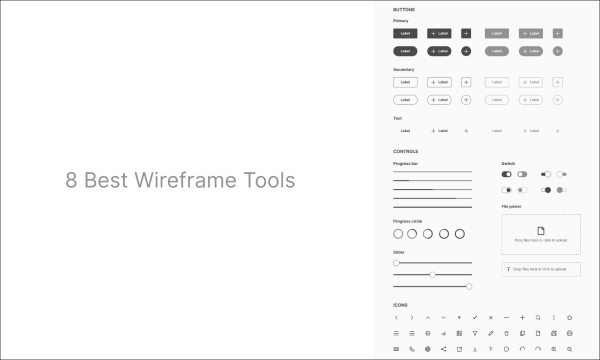
Choose the fidelity you need first
| Need | Look for | Evidence to check in a trial file |
|---|---|---|
| Fast structure | Quick blocks, reusable patterns, comments | A designer can sketch the main task in minutes and explain it without a presentation. |
| Flow validation | Links, states, overlays, and realistic transitions | A reviewer can complete the happy path and one error path without verbal instructions. |
| Team review | Concurrent editing, version history, permissions, and resolved comments | Feedback stays attached to the decision and can be followed from draft to approval. |
| Developer handoff | Inspect details, assets, naming, and export controls | A developer can find the intended state, measurement, and asset without asking for a second file. |
A wireframe tool is doing its job when it makes uncertainty visible. If the team is debating type scale, color, or final copy, move to a higher-fidelity tool only after the structure and task sequence are clear.
Eight wireframe tools by workflow fit
1. Pixso — browser-first team work
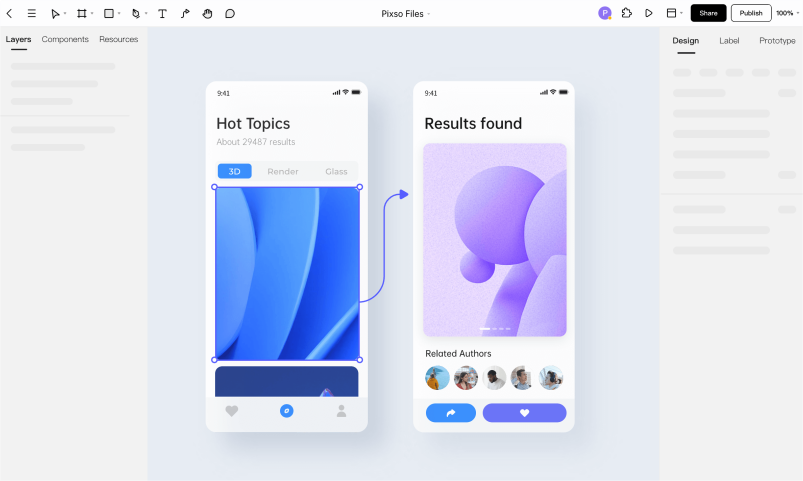
Pixso fits teams that want wireframes, components, prototypes, review, and handoff in one shared workspace. Test it with a real product flow: create two states, add a reusable component, invite a reviewer, and inspect the approved state. The useful question is whether those steps stay in one source of truth for your team.
2. Figma — collaborative interface and prototype files
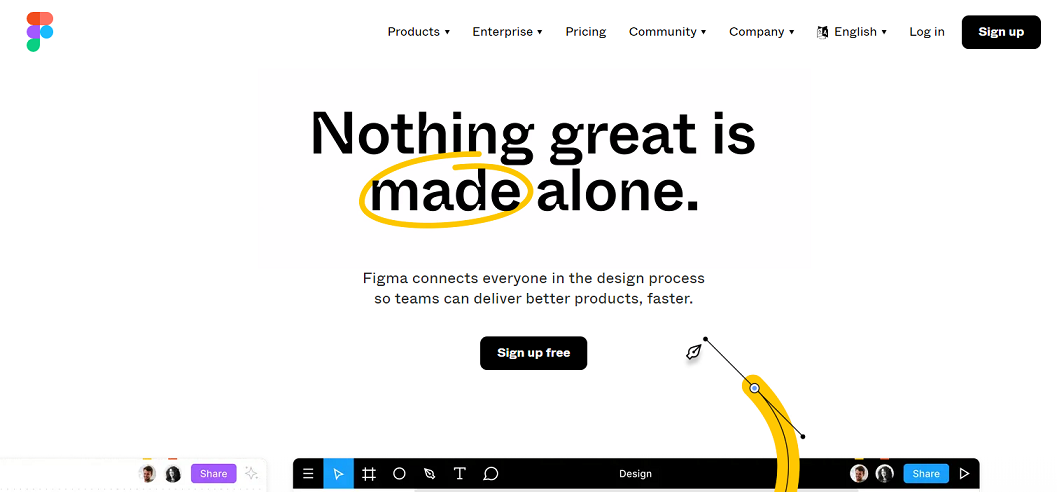
Figma is a strong fit when a team already works in shared interface files and wants wireframes to grow into components and prototypes. Check the review model, file permissions, version recovery, and developer inspection in the plan your team would actually use.
3. Sketch — macOS-centered product teams
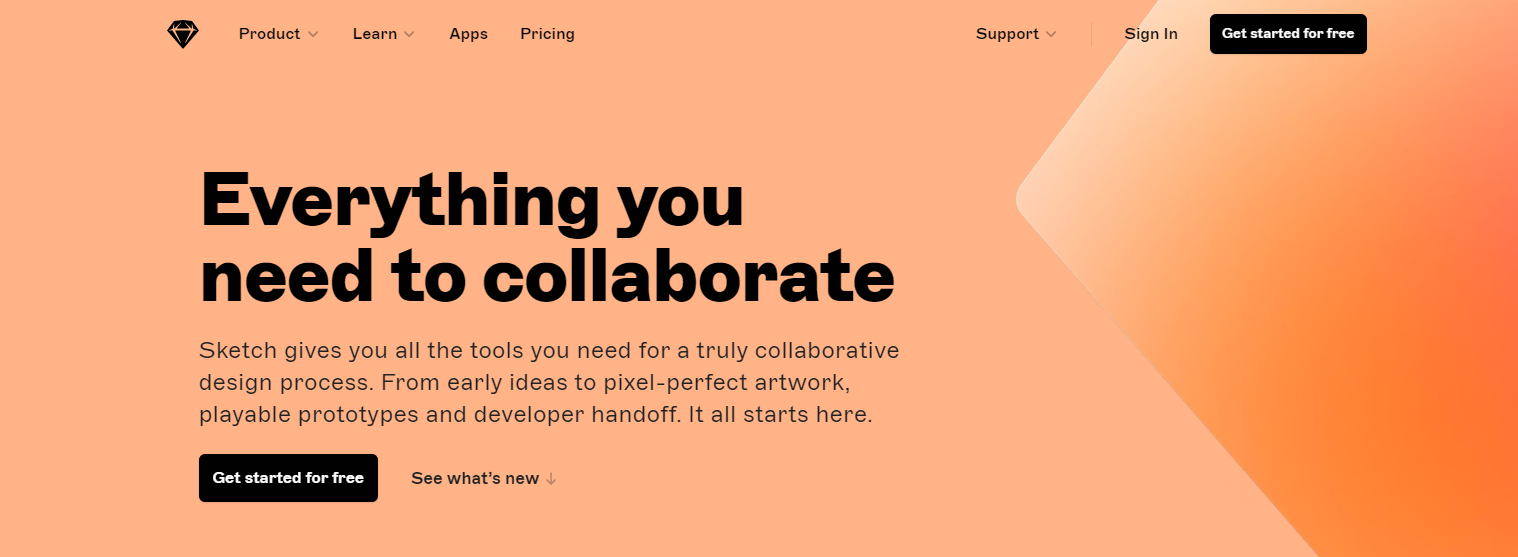
Sketch suits teams that prefer a native macOS workflow and a structured design library. Verify how collaborators without the desktop app review files, how prototypes are shared, and which handoff features are included in the current plan.
4. Axure RP — behavior-heavy prototypes
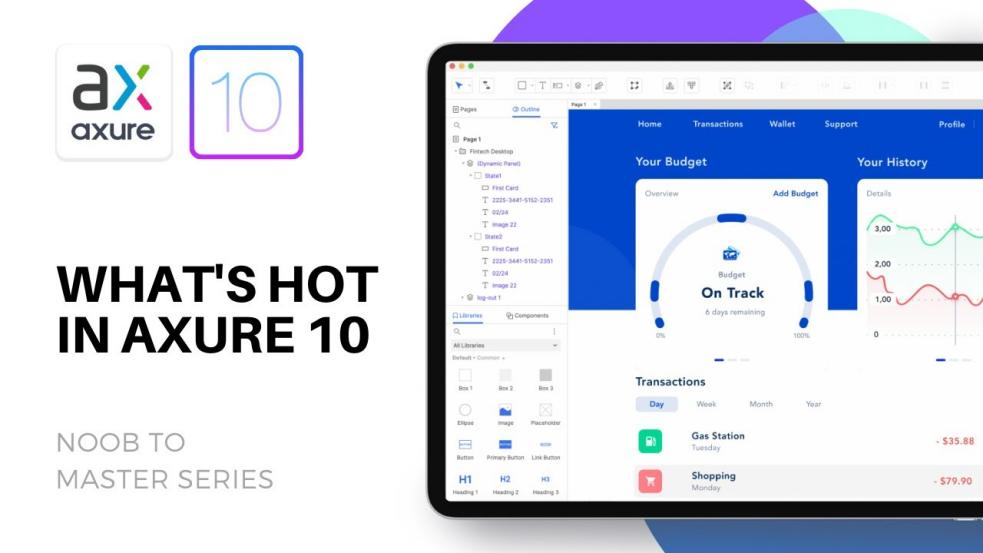
Axure is useful when a wireframe must demonstrate conditional states, variables, or complex form behavior. Use it when testing the behavior is more important than keeping every artifact in a lightweight canvas. Record which interactions are essential so the prototype does not become a specification nobody can maintain.
5. Adobe XD — verify availability before starting a new workflow
Adobe XD may still appear in older team libraries and case studies. If it is part of an existing workflow, inventory the files, sharing path, and export requirements first. For a new project, confirm current support and plan terms from Adobe before committing to it.
6. Fluid UI — quick linked flows
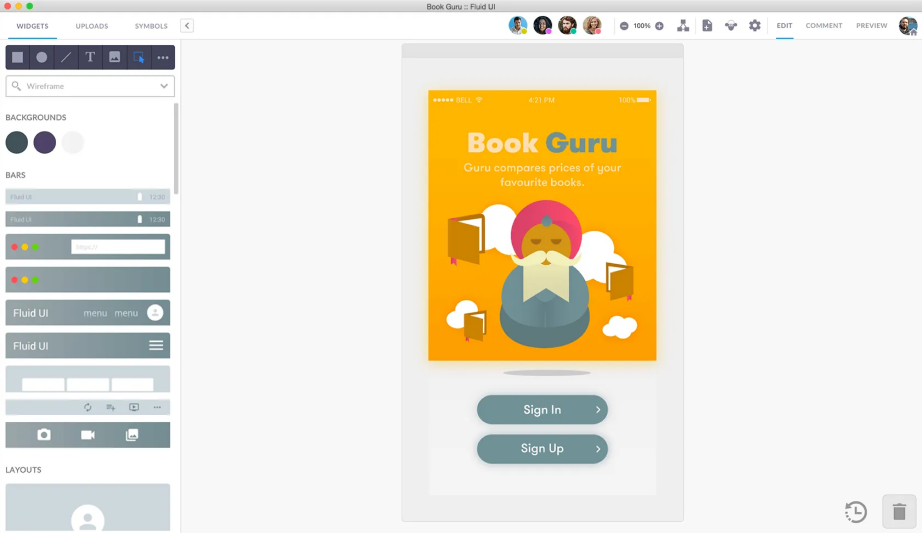
Fluid UI is a fit for teams that need to link screens quickly and test a straightforward path. Check whether its sharing, component reuse, and export options cover the complexity of your product rather than only a simple demo.
7. InVision — treat old files as an archive or migration input
InVision ended its design collaboration services on December 31, 2024. Treat its appearance in older wireframe guides as historical. Use any retained exports and project records to plan a move to a supported tool.
8. MockFlow — structured early-stage layouts
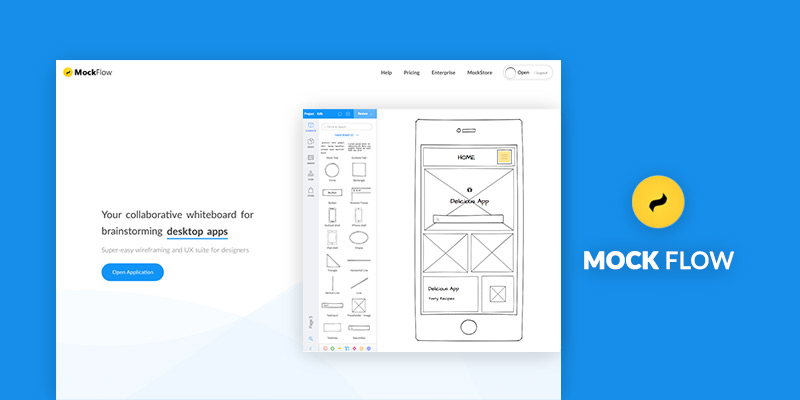
MockFlow can work for teams that want a focused way to sketch layouts and basic flows. Test the point where a wireframe becomes a component-based interface: if the team must recreate every decision elsewhere, include that cost in the evaluation.
Run a 30-minute evaluation
- Pick one real task with a primary path and one error state.
- Build the same two or three screens in each candidate.
- Ask a reviewer to complete the path without narration.
- Invite a developer to inspect one approved state and find its assets.
- Record time to first review, unresolved questions, and work that must be recreated elsewhere.
Choose the tool that reduces the most expensive uncertainty in your workflow. Recheck platform support, collaboration limits, export behavior, and plan terms on the vendor’s current documentation before purchase.
Further reading
For the broader interface-design workflow, see how to choose a UI design tool and compare the evaluation file with your team’s real constraints.


![[2026] Mockplus Review: Features, Pricing, and Alternatives](https://pixso.net/assets/media/mockplus-review-30b26f256480befd.webp)