Sherry
A useful Figma Dev Mode alternative for design-to-code handoff should make measurements, assets, component details and design changes easy for developers to find. Compare Figma Dev Mode and Pixso Dev View using the files and roles your team already uses.
For import instructions, follow the Figma-to-Pixso migration tutorial.
Part 1. What a Dev Mode Alternative Must Solve
A developer handoff workflow has five connected jobs:
- Locate the approved design: identify the correct file, page, frame, component, and version.
- Inspect implementation details: read dimensions, spacing, typography, colors, variables, component properties, and assets.
- Understand behavior: see responsive rules, states, interactions, loading, empty, error, and permission conditions.
- Coordinate change: know what is ready, what changed, who answered a question, and which decision is final.
- Deliver responsibly: use code and assets as evidence or scaffolding while engineering owns production quality.
Figma's current Help Center describes Dev Mode features including design inspection, Ready for dev view, variables, change comparison, status notifications, Dev Mode plugins, and links to development resources. Pixso's current public product pages position Dev View alongside UI design, design tokens, auto layout, team libraries, comments, version history, and developer handoff. These descriptions indicate overlapping jobs, not identical implementations.
Part 2. Figma Dev Mode and Pixso Dev View at a Glance
| Evaluation area | Figma Dev Mode | Pixso Dev View and workspace |
|---|---|---|
| Primary role | Developer-oriented inspection and handoff inside Figma files | Developer-facing inspection and handoff inside a broader product-design workspace |
| Source context | Native Figma design files and the team's Figma libraries | Pixso files, with current public pages advertising Figma, Sketch, and XD import support |
| Inspection | Layers, properties, variables, measurements, assets, and code-related views documented in Figma Help | Inspect the selected design context in Dev View; verify exact panels and permissions in the current account |
| Readiness and change | Ready for dev, statuses, notifications, and compare changes are documented Figma workflows | Use version history, comments, sharing, and the current handoff controls; verify whether a needed readiness status exists for your workflow |
| Code and assets | Use the current Inspect and plugins workflow, with implementation still owned by engineering | Use current developer inspection and code/asset output as starting points; validate framework, semantics, behavior, and integration |
| Migration cost | Lowest when the team already works entirely in Figma | Requires a pilot import, library review, permission review, and a new source-of-truth decision |
The table is a decision aid, not a universal ranking. Check the same representative task in both environments before changing a team standard.
Part 3. Compare the Inspection Experience
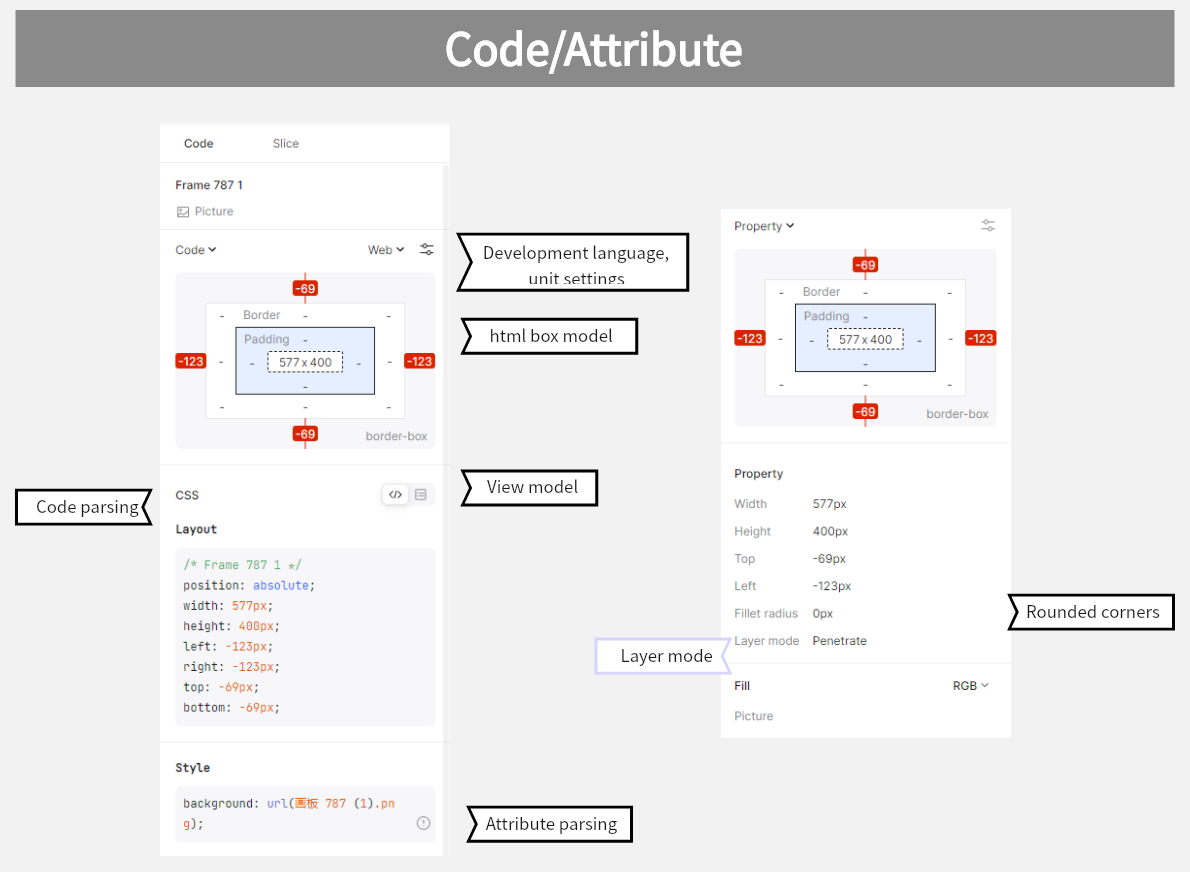
Use one screen to test both tools. Choose a screen with a text hierarchy, nested components, variables, an image, an icon, a responsive constraint, and at least one state change. Ask a developer to identify the same values in each environment without help from the designer.
Measurements and layout
Compare how quickly the developer can find width, height, spacing, padding, alignment, constraints, and auto-layout behavior. A value is useful only when the developer knows which frame, component, and responsive condition it belongs to.
Typography and color
Check font family, weight, size, line height, letter spacing, text color, fills, borders, opacity, and theme variables. Test a long localized string and a dark or alternate theme if the product supports them. Do not treat a copied hex value as a replacement for a semantic token.
Components and variables
Inspect a shared button, input, card, and navigation item. The developer should be able to distinguish an instance from a one-off layer, find the source component, and understand which properties can change. If the file uses variables, compare both the value and the mode or alias that produced it.
Part 4. Compare Readiness, Review, and Version Context
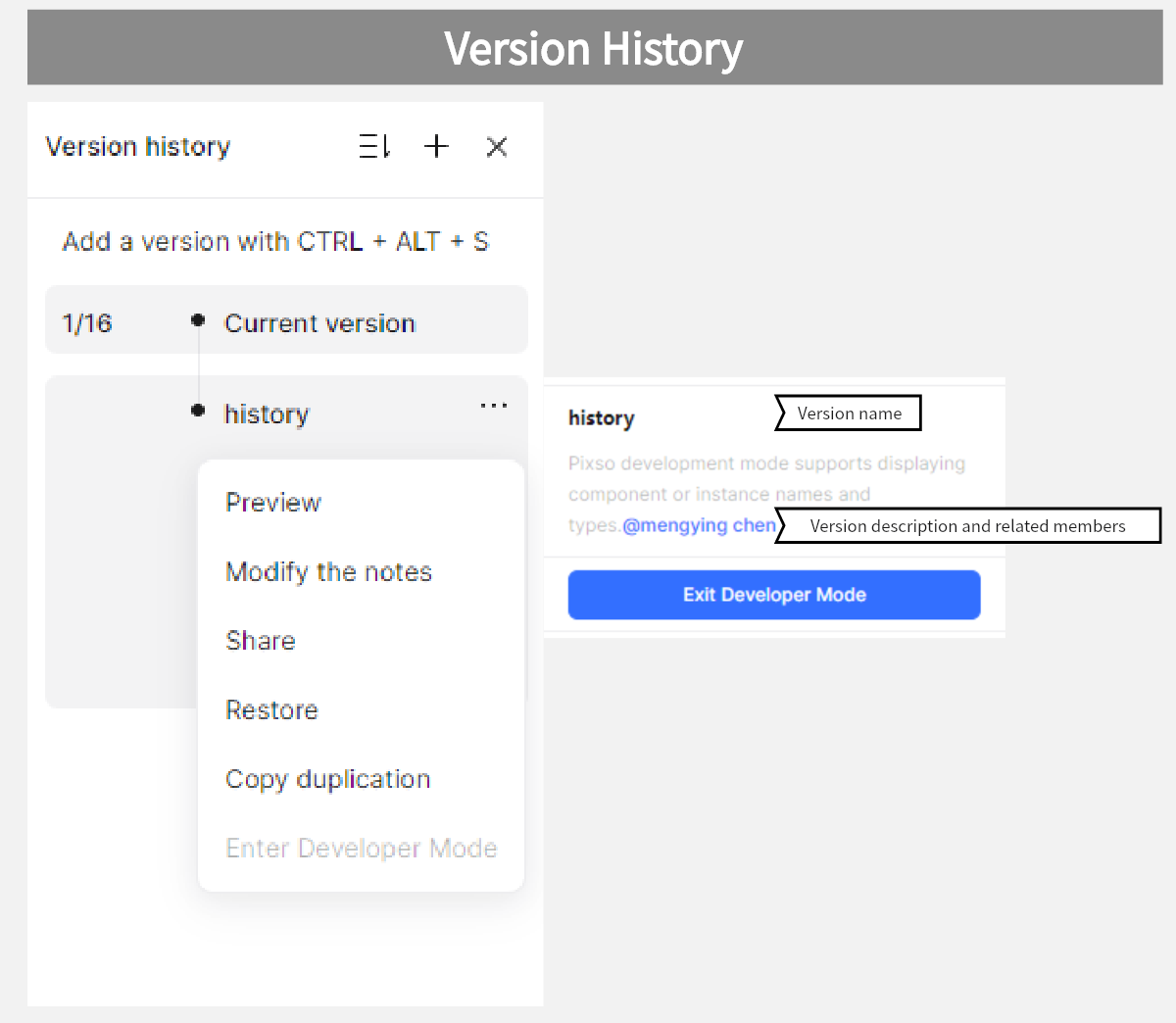
A handoff tool is also a coordination tool. Compare what happens when a designer changes a button, spacing token, or error message after engineering starts.
| Question | Why it matters | Evidence to request |
|---|---|---|
| Which version is approved? | Developers should not implement a superseded frame | Ready status, version name, or equivalent review record |
| What changed? | Small spacing or copy changes can alter tests and screenshots | Compare view, version history, or a written change note |
| Who answered the question? | Comments without ownership remain unresolved | Comment thread with owner, decision, and acceptance condition |
| How is a blocked state represented? | Permission, missing asset, and design ambiguity need different recovery | Visible issue status and next action |
Figma documents Ready for dev, statuses and change comparison in its current Dev Mode help materials. Pixso's public product pages emphasize comments, real-time collaboration, version history, and shared libraries. For a fair evaluation, define the same change scenario and record the actual number of steps, permissions, and review artifacts in each tool.
Part 5. Compare Code, Assets, and Implementation Limits
Code output is one of the most misunderstood parts of Dev Mode comparisons. A generated snippet can explain structure or accelerate a prototype, but it does not establish production readiness.
Evaluate both products using the same component:
- Can the developer identify semantic roles and interactive states?
- Can the developer locate the correct asset and export it at the required resolution?
- Does the output reflect variables, responsive behavior, and component properties?
- Can the team attach implementation resources, tickets, or documentation?
- What must engineering rewrite for accessibility, data, authorization, tests, and performance?
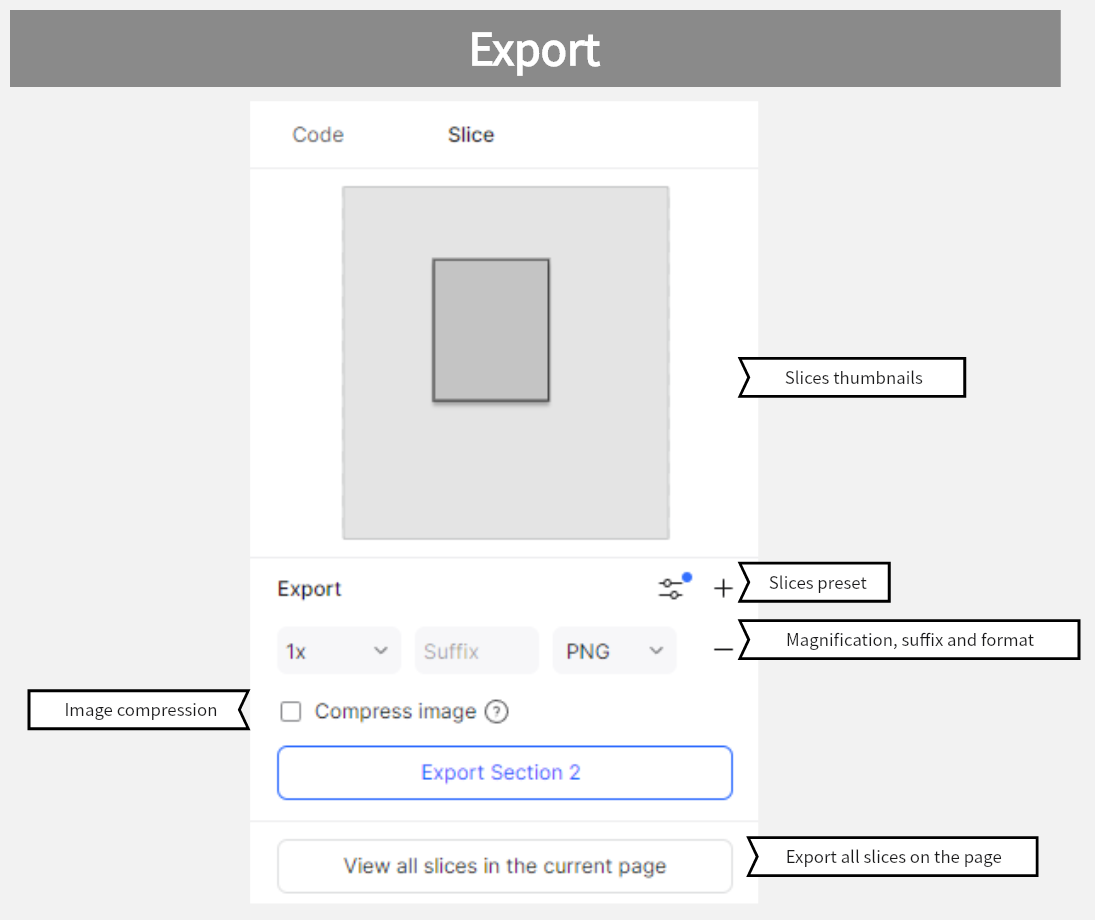
Pixso's current product positioning also mentions developer handoff and code output. Verify the current framework choices, export formats, account access, and known limits before publishing a team standard. Figma's Dev Mode plugins and development-resource links are similarly workflow-dependent. Compare evidence, not screenshots of a single panel.
Part 6. Evaluate Migration and Team Fit
Migration is the largest difference between a feature comparison and a real adoption decision. Score the cost of moving source files, libraries, variables, fonts, assets, permissions, and historical decisions.
| Dimension | Low migration risk | High migration risk |
|---|---|---|
| Source files | Few files, stable pages, limited dependencies | Many files, shared libraries, and active releases |
| Design system | Small component set with clear owners | Nested variants, token modes, plugins, and undocumented exceptions |
| Developer workflow | One stack and a repeatable handoff checklist | Multiple frameworks, generated-code expectations, and strict compliance gates |
| Collaboration | One team can agree on a source of truth | Several vendors, clients, locales, or restricted workspaces |
| Change control | Version names and review owners are already defined | Approvals happen in chat and no one can identify the final frame |
Run a pilot with a production-like file. Import it into Pixso when the intended workflow is available, compare the acceptance sample, invite the developer reviewer, and record the gaps. Do not migrate the whole organization from a marketing demo.
Part 7. Recommended Decision by Team Scenario
Choose Figma Dev Mode when
- Your source of truth is already Figma and migration would create more risk than value.
- Your team relies on Figma's documented Ready for dev, compare changes, variables, plugins, or organization controls.
- Developers need inspection inside the existing Figma libraries and file permissions.
Evaluate Pixso Dev View when
- You want design, collaboration, design systems, comments, version history, and developer handoff in one workspace.
- You need to import Figma files and are willing to pilot components, variables, fonts, assets, and edge states.
- Your team values a shared product-design workspace and can define a new source-of-truth and review policy.
Keep both during a transition when
- Different client or product teams have not agreed on one file system.
- The pilot has unresolved mapping issues or the legal/access review is incomplete.
- Engineering needs a staged handoff while designers continue to maintain the existing source.
A conditional recommendation is more useful than a universal winner. Record the task, file type, team size, access model, date, and evidence behind the decision.
Part 8. Figma Dev Mode Alternative for Design Handoff FAQ
Q1. What is the best Figma Dev Mode alternative for a design-to-code team?
There is no universal best choice. Figma Dev Mode is usually the lowest-friction option when Figma remains the source of truth. Pixso Dev View is worth evaluating when the team wants an integrated UI design, collaboration, design-system, and handoff workspace and can validate a migration pilot.
Q2. Is Pixso Dev View a replacement for Figma Dev Mode?
It can cover related inspection and handoff tasks, but it is not a drop-in clone. Compare the exact panels, file permissions, component and variable behavior, code or asset output, review controls, and plan requirements that your team uses.
Q3. Does Pixso support Figma file import?
Pixso's current public product page advertises Figma import support. Use a representative file and verify the current local or link-based workflow in your account. Inspect fonts, components, variables, assets, and interactions after import.
Q4. Can generated code replace frontend implementation?
No. Generated code is a starting point. Engineering must review semantics, accessibility, data, authorization, responsive behavior, error recovery, tests, architecture, and performance.
Q5. Which tool is better for design-system handoff?
Evaluate the source library, component variants, variables, modes, naming, versioning, and code alignment together. A tool with a polished inspection panel can still fail if the design system is not maintained or the developer cannot identify the approved component source.
Q6. How should a team compare these tools in 2026?
Give a developer the same screen in each tool and ask them to find its spacing, component states and exportable assets. Compare the missing information and the effort required to prepare the file.
Part 9. Try a Handoff Before Migrating
Use one active project to try file import, developer inspection and a design change. A small trial will show where your team needs extra explanation or file repair.
Use the Pixso product workspace and Help Center for current controls and usage instructions.
Conclusion
Keep the tool that fits your existing files and helps developers find the details they need. Switch when the improvement in day-to-day handoff is worth the import and training effort.