On this page

Scott
Choose a free wireframe tool by the work that must happen after the first screen. Pixso suits a flow that will grow into UI design and team review; Justinmind offers a free one-project workspace with interactive inputs; Pencil Project is useful for local mockups and exported documents. Wirefy requires HTML and CSS, while Framebox focuses on simple browser mockups and shared links.
If the wireframe needs to become a reusable interface, UI design collaboration in Pixso keeps layout, components, comments, and prototype connections in the same design workflow. The comparison below separates each tool's documented capabilities from its practical constraints.
Which free wireframe tool fits your task?
| Tool | Useful starting task | What the free option provides | Important boundary |
|---|---|---|---|
| Pixso | Take a wireframe into shared UI design and prototypes | A free starting option, with free viewer seats listed separately from editing seats | Viewing, editing, developer features, and AI usage have different plan or seat conditions |
| Justinmind | Design a form-based wireframe in one project | Unlimited screens in one project, interactive input fields, and image/vector export | Advanced interactions and collaboration are paid-plan features |
| Wirefy | Build a responsive wireframe in HTML and CSS | An open-source front-end foundation | Requires code and development setup; it is not a drag-and-drop canvas |
| Pencil Project | Create a local mockup and share an exported flow | Desktop shape collections, page links, and document export | Its exported page links do not provide the full behavior of a running application |
| Framebox | Sketch a basic screen and share a link | Browser UI units, comments, saved frames, and link sharing | The basic mockup workflow is narrower than a full UI design system |
Use the same small flow to make the choice
A three-screen appointment flow is enough to expose meaningful differences: select a service, choose a time, and review the booking. Add one unavailable-time state. Use the same labels and sample dates in each candidate so the comparison is about the tool rather than a different design.
- Structure: can you rearrange the service, time, and primary action without rebuilding the whole screen?
- Behavior: do you need only page links, or actual form inputs and conditional interactions?
- Review: will collaborators edit the source, comment on a shared mockup, or review an exported document?
- Next step: will the wireframe become the UI design, a coded prototype, or a specification for a separate team?
These questions lead to different choices. A local document may be enough for a workshop; a team that needs a shared component library has a different requirement. More features are useful only when they support the intended workflow.
5 Free Wireframe Tools for UI Design
1. Pixso
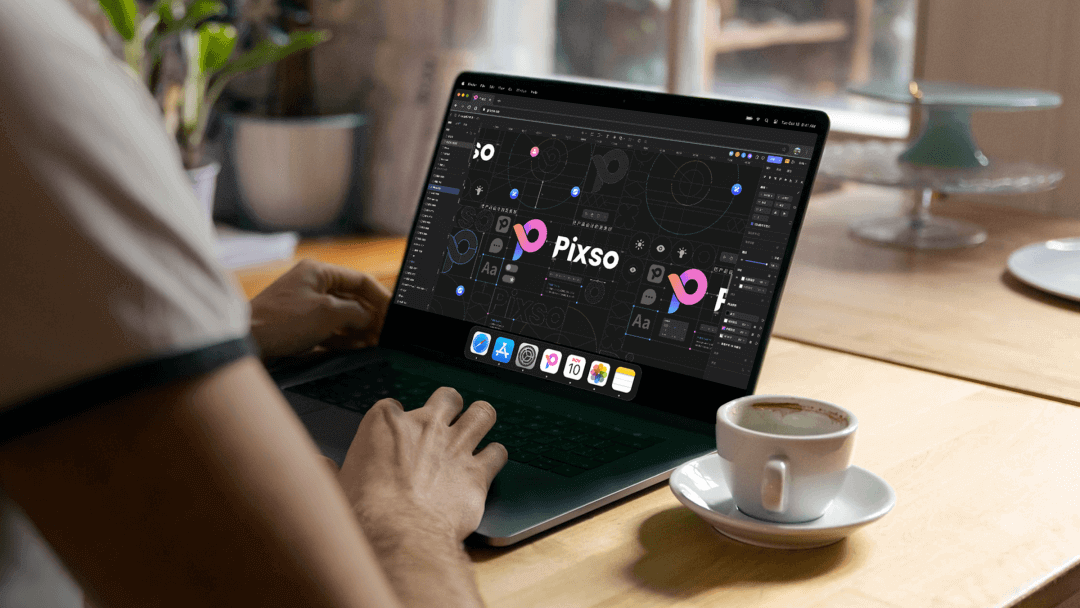
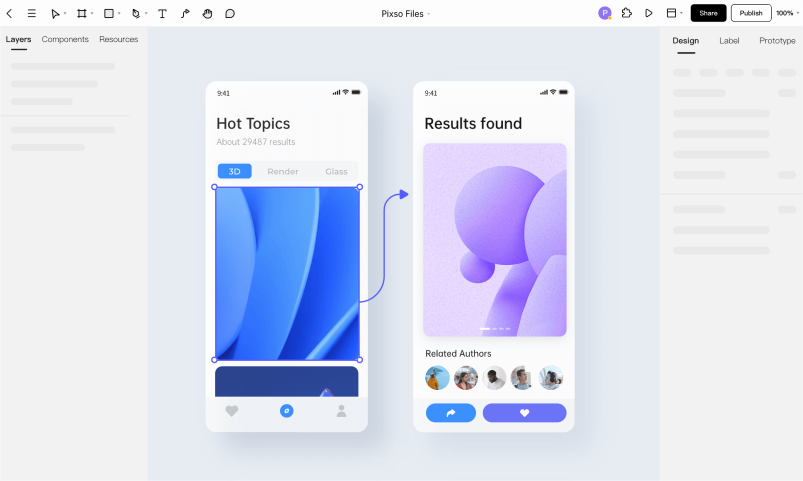
Pixso combines wireframing, UI design, prototyping, comments, and developer handoff. You can begin with simple shapes and text, then keep the same screens as you introduce reusable components and connect the booking steps. This is useful when the people reviewing the early structure will also work on the later interface.
Strengths
- Wireframes can develop into detailed interface designs without redrawing the entire flow in a separate design tool.
- Reusable components and styles help keep repeated elements consistent.
- Prototype connections and comments support discussion of the same screens.
Trade-offs
- A shared visual prototype does not implement the booking service or validate its server behavior.
- Free viewer access is different from editing access. Team editing, developer capabilities, and AI credits are separate considerations in the Pixso plan and seat comparison.
2. Justinmind
Justinmind is a useful option when a wireframe needs editable form fields. Its official Free plan includes one project, unlimited screens, interactive inputs, vector tools, and PNG, JPG, and SVG export. A multi-screen booking form therefore fits its stated free project limit.
Strengths
- Form inputs make the wireframe more concrete than a collection of static field rectangles.
- Unlimited screens allow several states within the single free project.
Trade-offs
- The free tier is limited to one project.
- Advanced interaction design, variables, and advanced collaboration are listed in Standard; interactive HTML export is listed in Professional. A free form mockup should not be confused with every paid prototyping capability.
3. Wirefy
Wirefy is a responsive front-end framework for wireframes. Its official repository describes a foundation of components for people with HTML and CSS knowledge. In the booking example, you would build the layout in code and view it in a browser rather than arrange screens on a visual canvas.
Strengths
- The browser renders real text and responsive layouts, which helps explore content reflow.
- The source can be adapted when the team wants control over the wireframe's HTML and CSS.
Trade-offs
- It requires code and development setup; it is not a shortcut for a designer seeking a no-code canvas.
- Form validation, booking rules, and review collaboration are work to provide around the framework, not evidence that a complete application has been generated.
4. Pencil Project
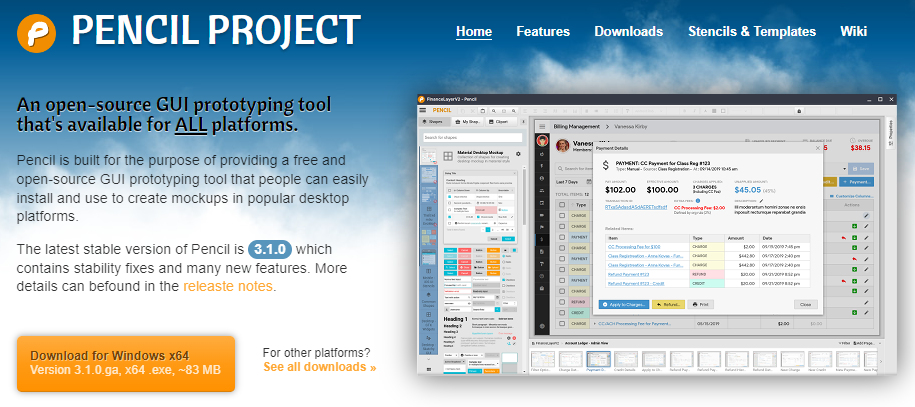
Pencil Project is a free, open-source desktop tool for mockups and diagrams. Its documented features include UI shape collections, connectors, links between pages, and exports to PNG, SVG, PDF, document formats, and web pages.
Strengths
- Useful for building a mockup locally from reusable shapes.
- Page links become hyperlinks in a web export, so reviewers can follow a basic screen sequence.
- Document exports suit teams that exchange a packaged review artifact.
Trade-offs
- A linked export simulates navigation; it does not supply the booking logic behind the screen.
- A document-based review needs a clear source owner and version process. It is a different collaboration model from simultaneous editing of one cloud design file.
5. Framebox
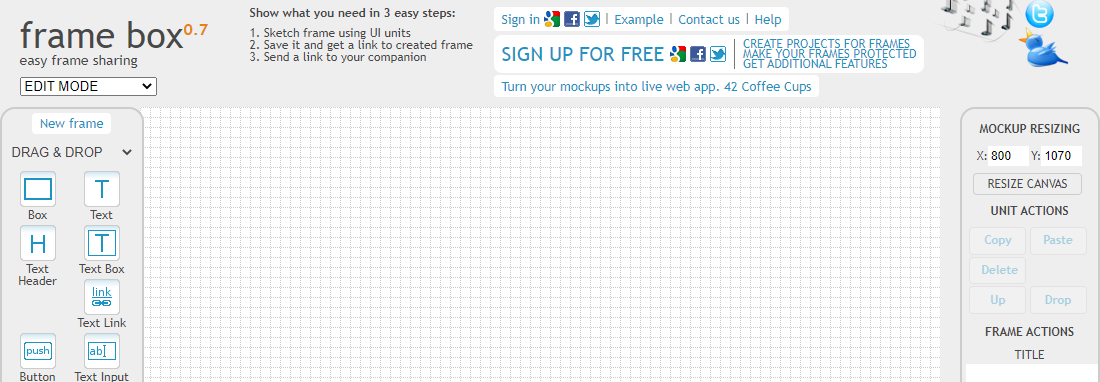
Framebox focuses on lightweight browser mockups. The Framebox interface provides UI units, canvas resizing, comments, saved frames, and a link to share a frame. That is a small, direct workflow for discussing the arrangement of a booking screen.
Strengths
- Drag-and-drop UI units support a quick screen sketch.
- A saved frame can be shared by link, with comments placed in the mockup.
Trade-offs
- It is a basic mockup workflow rather than a full component-library and high-fidelity design environment.
- The editor is available through an HTTP connection. Avoid using that connection for confidential project material; keep trial content non-sensitive.
Choose the workflow you need after the wireframe
Choose Pixso when the early layout needs to grow into shared interface design and prototypes. Choose Justinmind when form inputs are important and its one-project free limit fits the work. Choose Pencil for a local mockup and exported review document. Wirefy fits teams comfortable working in HTML and CSS. Framebox is best treated as a lightweight sketching option for non-sensitive material.
Start with the appointment flow, then carry it through the way your team actually reviews work. The important distinction is whether you need an editable design file, a linked document, or a coded layout—not which tool has the longest feature list.