On this page

Scott
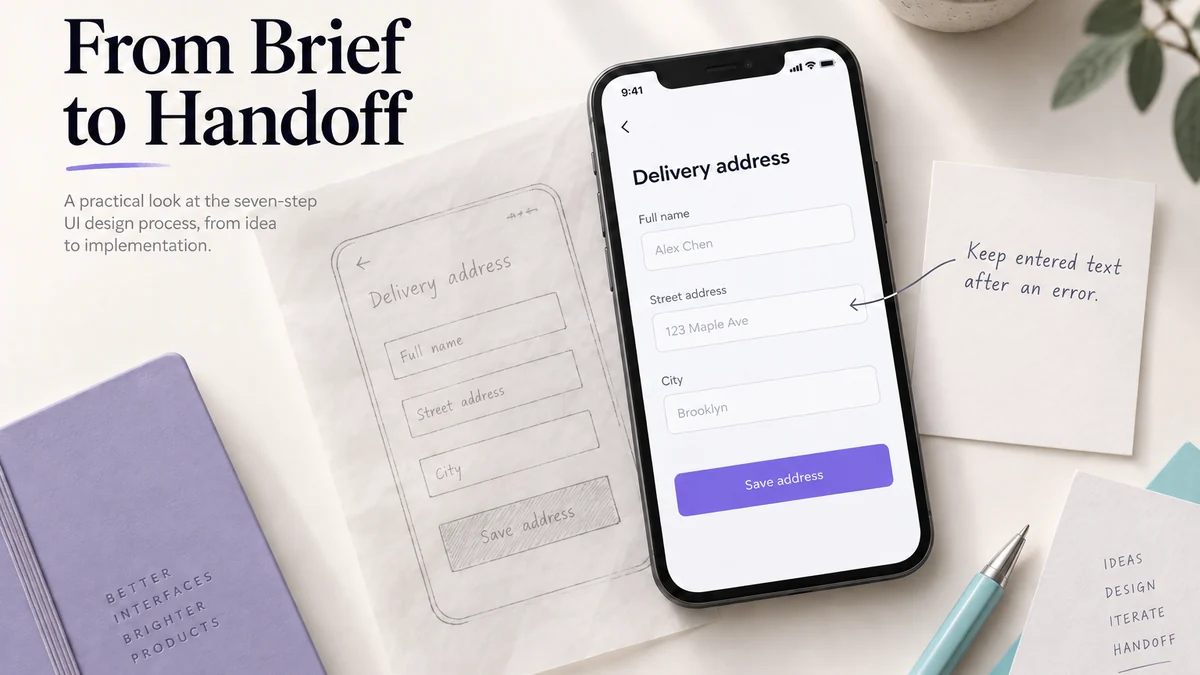
UI design is the visual and interactive layer of a website, app, or digital product. It defines how screens look and how controls, components, states, and feedback help people complete tasks. UX covers the broader experience and flow; UI turns that flow into an interface that can be reviewed, tested, and handed to developers.
This guide explains what UI design includes, how UI differs from UX, what a UI designer delivers, and how to move from a brief to a reviewable interface.

What Is UI Design
UI design stands for user interface design. It covers the visual and interactive parts of an application, website, or other digital product that people use with touch, a mouse, a keyboard, or assistive technology.
A UI design includes layout, typography, color, icons, components, content hierarchy, interaction states, and feedback. The goal is to make the next useful action understandable while keeping related screens consistent.
UI design vs UX design
- UI design: defines the interface people see and operate, including screens, controls, components, states, and visual feedback.
- UX design: addresses the broader experience, including user needs, flows, information architecture, and how a person reaches an outcome.
- How they work together: UX decisions shape the path through a product, while UI decisions make each step clear and usable. Research, wireframing, visual design, prototyping, and review connect the two disciplines.
UI design process and deliverables
- Clarify the task: start with a brief, audience, constraints, and success criteria; produce a short task list.
- Map the structure: turn the task into a flow and low-fidelity wireframe; produce screens, states, and navigation decisions.
- Build the interface: apply type, color, components, and responsive rules; produce reusable screen layouts.
- Connect and review: link the main states in a prototype and ask a reviewer to complete the task; record friction and open questions.
- Prepare handoff: document component behavior, states, assets, and implementation notes so developers can inspect the approved design.
UI design is therefore more than visual styling: it is a sequence of decisions that turns a product requirement into a testable interface and a reviewable handoff.
What Does a UI Designer Do
UI designers translate product requirements and user flows into clear, consistent screens. They choose and combine layout, type, color, components, and interaction states so a product can be reviewed before implementation.
They also inspect existing interfaces, identify unclear or inconsistent states, explain design decisions to teammates, and adjust the work after feedback. The exact responsibilities vary by team, but the output should be specific enough for design review and developer handoff.
How to Be a Good UI Designer
Now that you know what UI design is and what a UI designer does, you can build the skills and habits that support clear interface work. Keep learning, practice with real product tasks, and use design tools and resources that fit the work you need to deliver.
The following section rounds up the fundamentals that help you develop as a UI designer.
Basic UI Designer Skills
Every career path comes with a prerequisite level of skills for individuals to thrive. For UI designers, the needed skills are usually a combination of soft skills and hard skills to help them scale up their practice and become adept at churning out spectacular UI design for software products, mobile applications, and other kinds of product interfaces. Here is a practical overview of hard and soft skills a UI designer should develop.
Hard Skills
UI designers combine visual design skills with practical knowledge of interface tools and interaction design.
-
UI designers should understand prototyping, responsive design, and the interface tools used by their team. A working knowledge of components, states, and layout constraints helps them create work that can be reviewed and maintained.
-
UI designers need a working understanding of color, type, spacing, and visual hierarchy. Interactive design also requires attention to navigation and information flow. Coding is not a prerequisite for UI design, but familiarity with implementation constraints can make collaboration with developers clearer.
Soft Skills
As UI design is often conducted in a collaborative sphere, designers should have basic soft skills, including:
-
Communication skills to interact with a team or receive feedback from test groups, and also deliver pitches, case studies, or presentations to relevant stakeholders.
-
Attention to detail and the ability to devise solutions for problems rank an individual higher on the efficiency scale. In a highly collaborative landscape, great UI designers should be sufficiently skilled at participating as a team, sharing ideas, and also receiving constructive criticism in a positive light.
Must-know UI Design Principles
To have your UI design standing on a solid foundation, there are some principles of UI design that serve as basic pillars.
Clarity
This principle of UI design helps users interact better with the elements on an interface and thus makes navigation easier. While designing, you should be able to associate your element with certain actions accurately, deploy highly visible elements and position things at specific locations to allow for smooth and seamless navigation.
Predictability
Some UI elements have familiar placement and behavior. For example, users often expect primary navigation and common controls in recognizable locations. Follow platform conventions unless the product has a tested reason to deviate, and explain the decision to reviewers.
Accessibility
Creating user interfaces that are easily accessible to users is one of the top principles for UI designers. In design, one should recognize the diversity of users that an application is made for.
Certain guidelines should be met when designing software and applications. Accessibility practices include sufficient color contrast and appropriate image alt text to support people who use assistive technology.
Flexibility
As much as the core of UI design is in the graphical representation of applications, flexibility helps a design adapt to different needs. UI design can accommodate users with different needs; some specific manifestations include the use of filter bars, shortcuts, and advanced search features. When flexibility is incorporated, the needs of users with different device and gadget configurations are considered.
User Control
The objective of UI design is to provide an application for users which is easy to use and would help with smooth navigation. The user control principle of design entails specific actions to allow users to take charge of the interface. This includes feedback prompts, highly visible action buttons, and interactive responses.
A UI Design Tool for Practice and Collaboration
User interface design is often based on the creativity, talent, and skills of a UI designer. A comprehensive design tool is integral to harnessing this combination and providing an effective and appealing design.
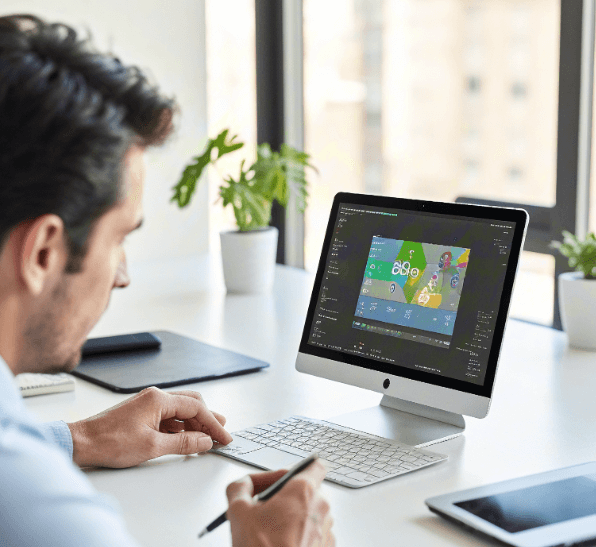
Pixso provides interface design, reusable components, layout support, prototyping, and team review in one workspace. The features available to a project depend on the current plan and workspace settings, so confirm the requirements that matter to your team before adopting a workflow.

Because interface work is collaborative, Pixso supports comments and review around shared files. Developers can inspect approved design details and supported assets, while project owners can use a share link to review the current work. Confirm permissions, export needs, and handoff responsibilities for the project before release.
To put these skills into practice with your team, explore collaborative UI design in Pixso and compare how shared editing and feedback fit your workflow.
Conclusion
To develop as a UI designer, practice translating user needs into screens, interaction states, and clear feedback. Build a portfolio that explains the task, your design decisions, and what you learned from feedback.
Use the checklist above to turn a UI design brief into a reviewable interface. When the task involves shared editing, comments, prototypes, and handoff, use the Pixso UI design workflow described above.
Quick answers about UI design
What is UI design? UI design is the visual and interactive layer people use to operate a digital product. It covers layout, type, color, components, states, and interaction feedback.
What is UI vs UX? UX describes the broader experience and flow; UI focuses on the interface people see and operate. They overlap throughout research, wireframing, visual design, prototyping, and review.
What does a UI designer do? A UI designer turns product requirements and user flows into consistent screens, components, states, and prototype-ready layouts. Continue with UI design examples.
What are common UI design deliverables? Common deliverables include screen layouts, reusable components, interaction states, prototypes, and handoff notes. Follow the UI design process for a step-by-step workflow.