Design System
Tool for
UI Teams

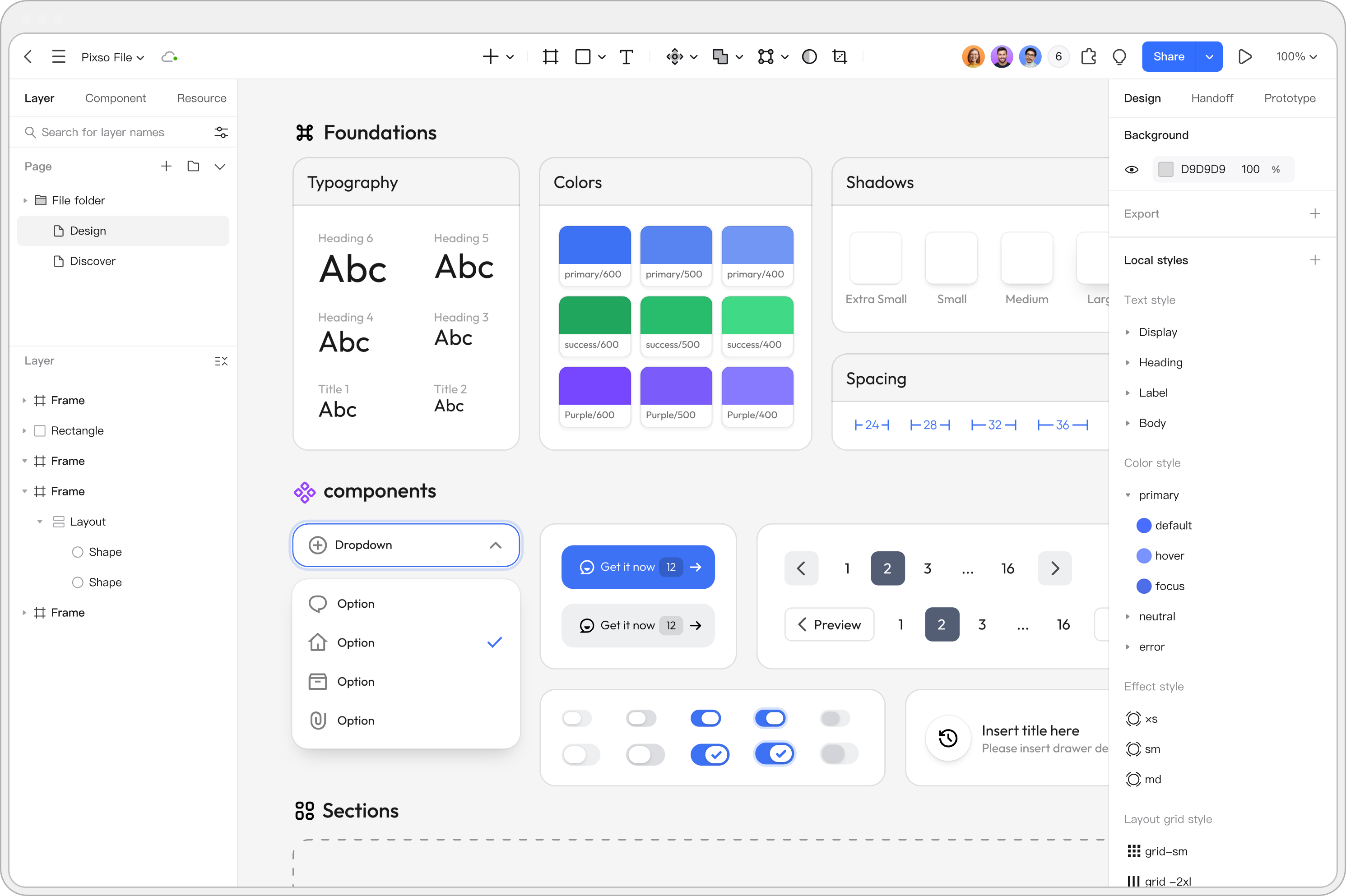


Build a Shared UI Design System

Tailor Your UI Design System
Create a shared library of components and styles for your product. Give teammates a common starting point and review where local variations are needed.

Manage Shared Color and Text Styles
Define reusable color and text styles for headings, body copy, and interface elements. Apply shared styles as you build and review related screens.

Reuse Shared Design Assets
Keep reusable icons, images, and components in shared libraries. Review published updates before applying changes to product screens.
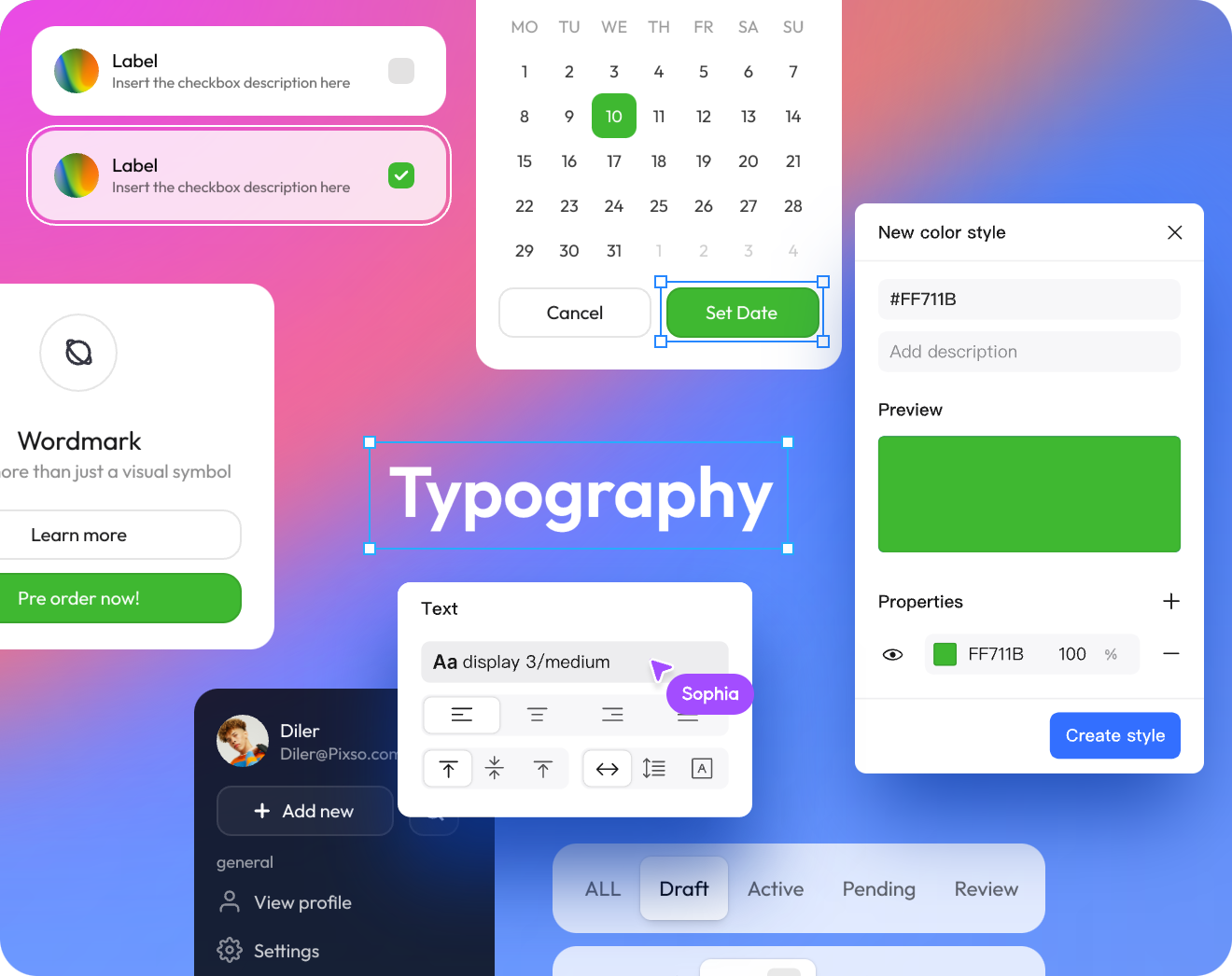
Build a Reusable Component Library

Create Adaptable UI Components
Create UI components from text, shapes, and vector elements. Define reusable patterns for buttons, navigation, and other interface elements.

Publish Components to Team Libraries
Team members can publish components to the team library, enabling others to reuse these resources quickly and maintain visual consistency.

Minimize Repetitive Work
Reuse components across screens and prototypes. Update shared patterns and review linked instances instead of rebuilding each repeated element.
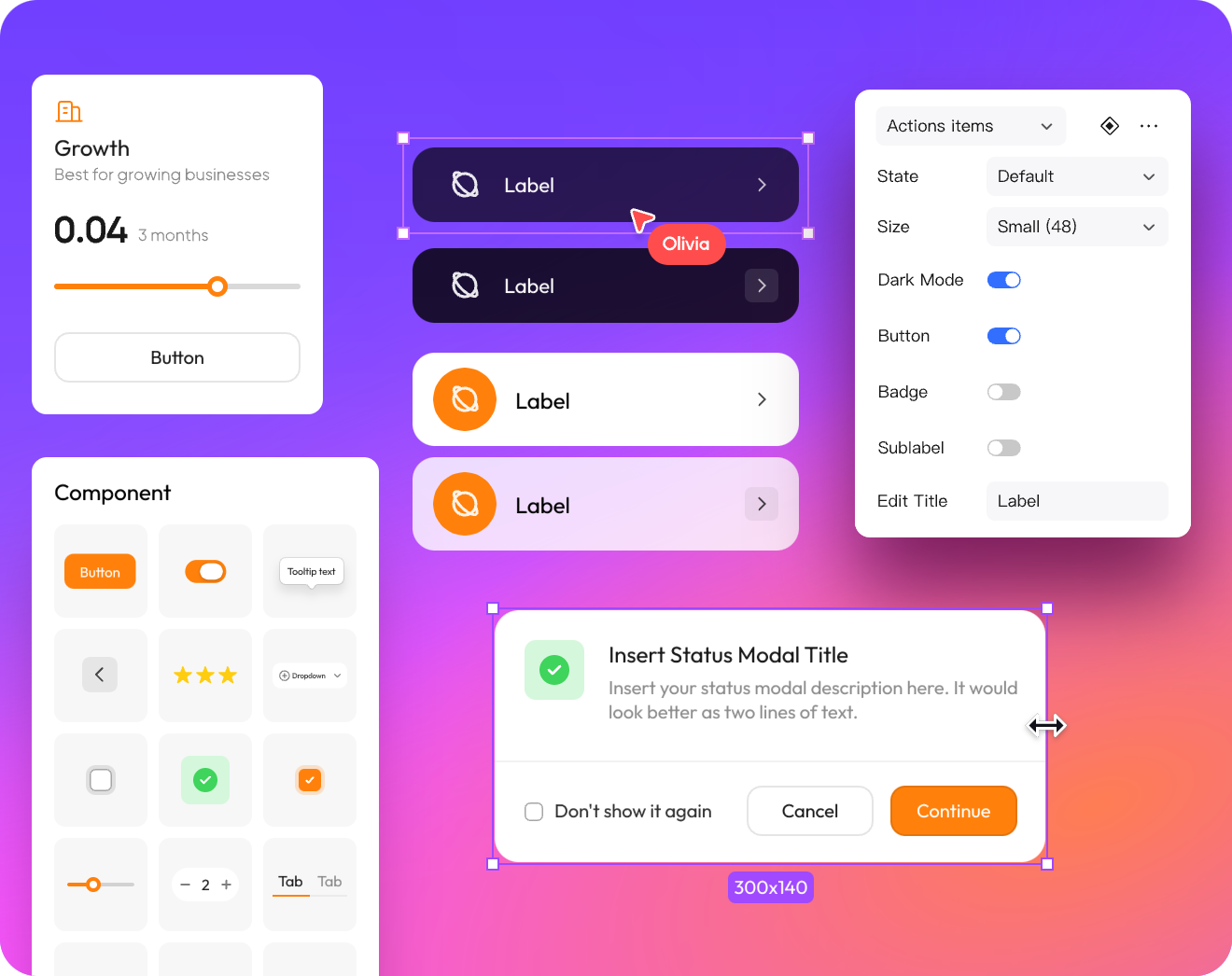
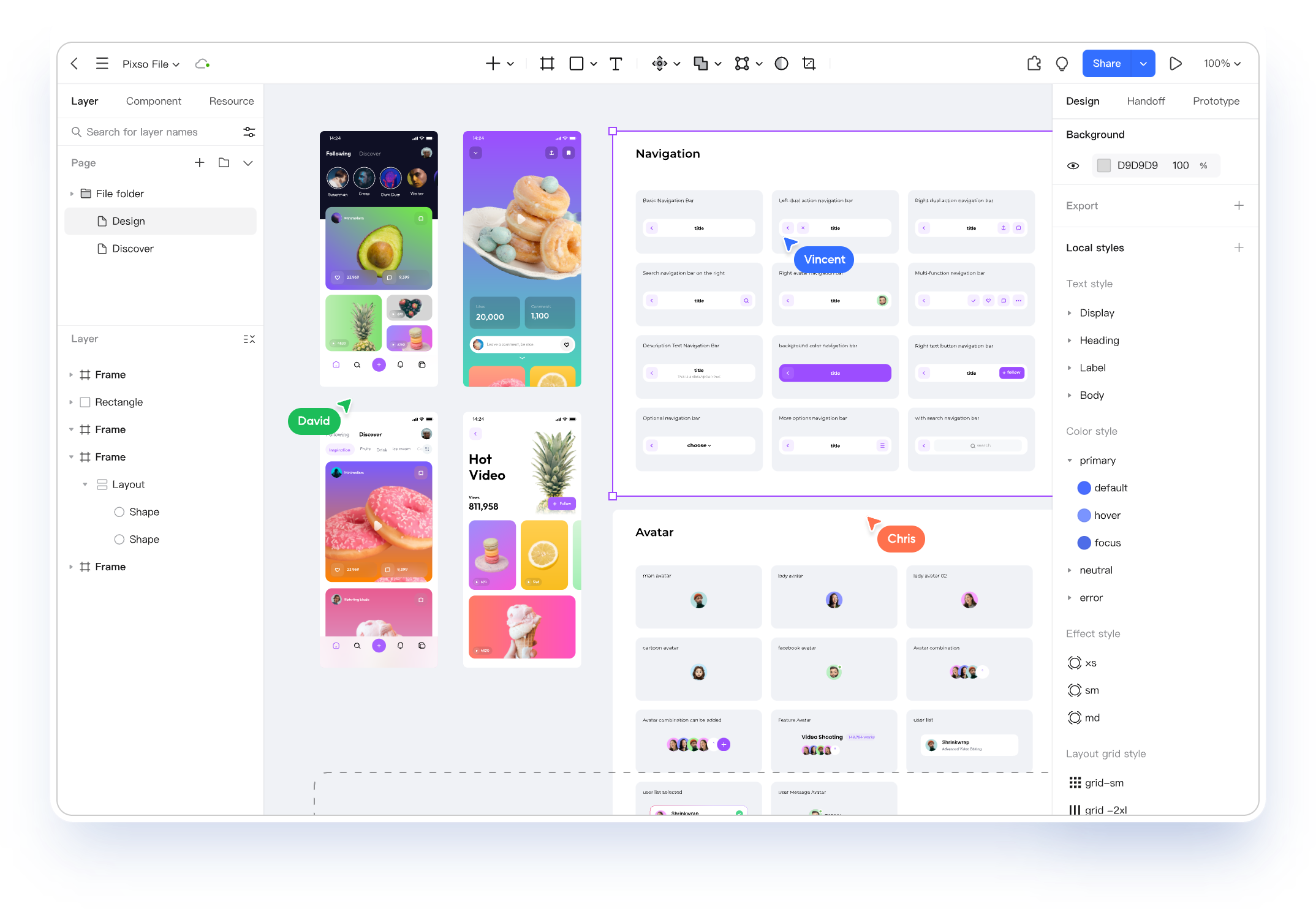

Manage Design System Resources in Pixso
Explore Design System Resources
Component Variants and Auto Layout
Prepare Design References for Handoff
Real-time Online Collaboration
Explore More Features

Vector Design
Draw and edit vector icons and visual assets for your interface, then reuse them across components and screens.

Smart Selection
When there are multiple objects to be aligned, smart selection can be used to evenly arrange selected layers into rows and columns.

File Compatibility
Import supported Sketch and Adobe XD files, and work with SVG assets. Import and export formats differ; review fonts, components, and effects when moving files.

Smart Templates
Start with a template to explore layout and style choices, then adapt its structure and components to the product you are designing.

Access Permissions
The file owner can give collaborators view or edit access to a shared file. Enterprise users have more flexible access permissions.

Developer Handoff
Developers can inspect measurements and style references and access available assets, subject to file permissions. Review implementation details together before delivery.

Guest Mode
Share a file link with reviewers. Whether guests can view it without a new account depends on the file and workspace access settings.

Version History Management
Create and name file versions to mark review points. Use the version history available to your workspace to compare changes or revisit earlier work. For practical interface guidance, see UI design examples and the UI design process.
More Collaborative Cases
UI Design
Create UI screens with reusable components and styles, then review interface details with your team.
UX Design
Connect screens into interactive flows and review the intended experience in a browser.
Team Brainstorm
Use Pixso Whiteboard to map ideas, collect notes, and discuss product requirements with your team.