On this page

Scott
Figma offers a free Starter plan for design, prototyping and other entry-level workflows. It can support personal work and some small-team projects, but the answer to “is Figma free?” depends on where the files live, who edits them and which features the team needs.
Start with the team’s actual work
A useful comparison starts with a file and the people who use it. Separate personal drafts from shared team files, and distinguish someone who edits a design from someone who only reviews it. Then check the library, history and developer handoff needed to maintain that file after the first review.
- People: identify who must edit designs, comment, view prototypes or inspect implementation details.
- Files: count the shared design files and folders, including reusable libraries and archived work that must remain editable.
- Review: test how an external reviewer reaches the approved prototype and whether the intended access is available.
- Handoff: decide whether basic design reference and exported assets are enough or the developer needs Dev Mode.
The sections below explain Starter’s main limits, why a team might move to a paid Figma plan, and how to compare the same workflow in Pixso’s shared UI workspace. Plan details are based on the linked current documentation; use the purchase screen to confirm billing terms before paying.
What can you do with Figma for free?
Starter provides access to core design and prototyping tools, so a small team can work together within its shared-file and permission limits. It is not restricted to solo designers. However, an unlimited number of personal drafts does not mean that all those drafts can be collaboratively edited for free.
Figma separates the free Starter plan from Professional, Organization and Enterprise plans. The Starter overview explains what is included; the pricing comparison shows the paid features and seat choices.
The limits that matter in Figma Starter
Starter has one shared folder. Its current file allowance is three Figma Design and Figma Sites files combined, plus three FigJam files and three Figma Slides files in that folder. Drafts are unlimited, but collaborators invited to Starter drafts receive view access rather than edit access.
Other important boundaries are 30 days of version history, no team libraries and no Dev Mode. The shared folder is accessible to all team members; invitation-only folders require a paid plan. These restrictions affect ongoing work more than the headline “free” label.
For example, two shared design files and one FigJam board do not consume one combined three-file allowance: Design/Sites and FigJam have separate limits. But adding a fourth Design/Sites file exceeds that category’s allowance. Moving work into personal drafts changes collaboration permissions, so it is not an equivalent way to keep every project jointly editable.
When does a paid Figma plan make sense?
A paid plan becomes relevant when the team needs more shared files, reusable team libraries, longer history, advanced prototyping or developer tooling. Judge those requirements individually; having more than one collaborator does not automatically mean Starter is unsuitable.
Professional is organized around a single team, with expanded shared-file, library and feature access. Its billing depends on the term and paid seat types: Full, Dev and Collab. A person editing Figma Design needs the corresponding design access; a developer and a reviewer may need different roles. Starter already has limited version history, so the upgrade is not the first point at which history exists.
Organization and Enterprise address broader administration, shared resources and security needs across an organization. Compare those controls with the way your company manages teams and access. Avoid using old per-editor prices as today’s quote: the current seat model, billing term, currency and applicable taxes determine the actual purchase.
Compare Pixso as an alternative for the same task
If Starter’s shared-file or handoff limits interrupt the workflow, compare both a suitable Figma paid plan and an alternative workspace. Moving tools has a cost too: the team must inspect imported files, restore any missing behavior and learn how reviews and resources are maintained.
Pixso offers a free entry plan as well as paid collaboration plans. It is a useful candidate when the team wants UI design, prototyping and review in a shared browser workspace; it should be evaluated against the same file and roles used for the Figma comparison.
What does Pixso provide?
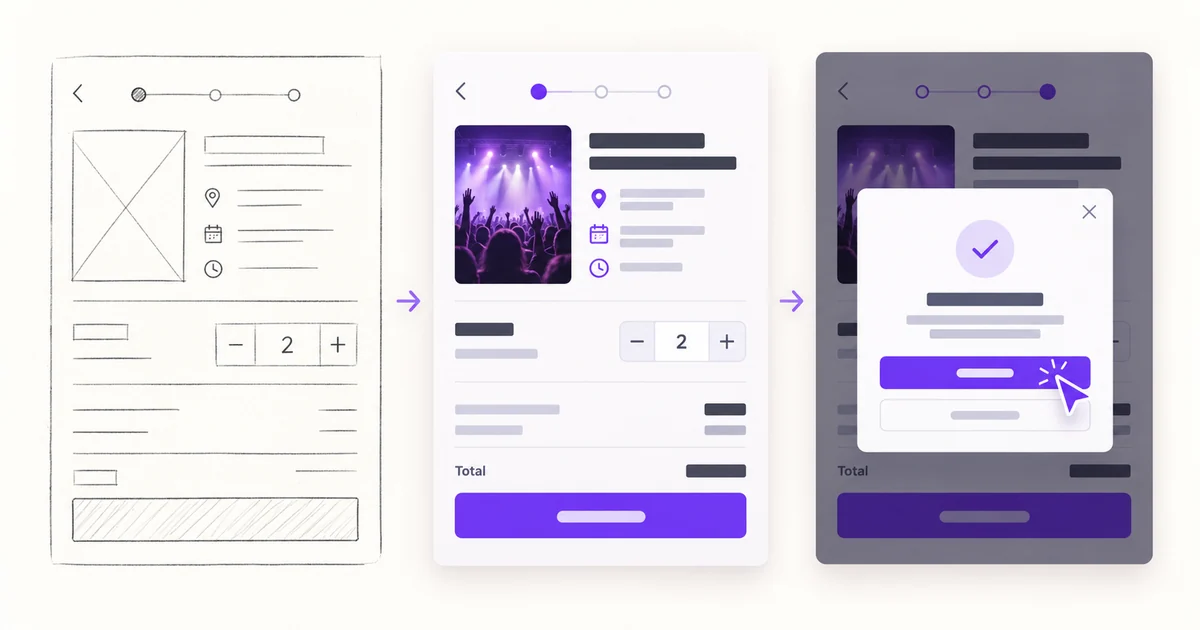
Pixso combines interface design, reusable components, prototyping and team collaboration. You can begin with a wireframe, refine the UI and review the intended flow in the same design workflow. These tools help organize the work, but they do not remove the need to decide how the interface behaves.
Build the important screens and connect the interactions that explain the user’s path. Ask a reviewer to complete one task, such as correcting a form error and submitting successfully. That reveals whether the prototype communicates the design more usefully than a feature checklist alone.
Use roles and sharing permissions deliberately. A designer needs editing access, while a product manager or client may only need to view and comment. A developer’s inspection and code-generation requirements should be checked separately from those review permissions.
Figma Starter and Pixso: compare the boundaries
Both products offer free entry plans, but the limits are not interchangeable. The comparison below focuses on shared files, review, history and migration, because those determine whether the team can finish and maintain a real project.
The current Pixso pricing page lists unlimited drafts and viewer seats, one project per team, three design files per project, three pages per design file and three whiteboard files per project for Free. Its Team tier lists unlimited projects, files, pages and version history, plus team resource and font libraries. Unlimited viewers are not unlimited design editors.
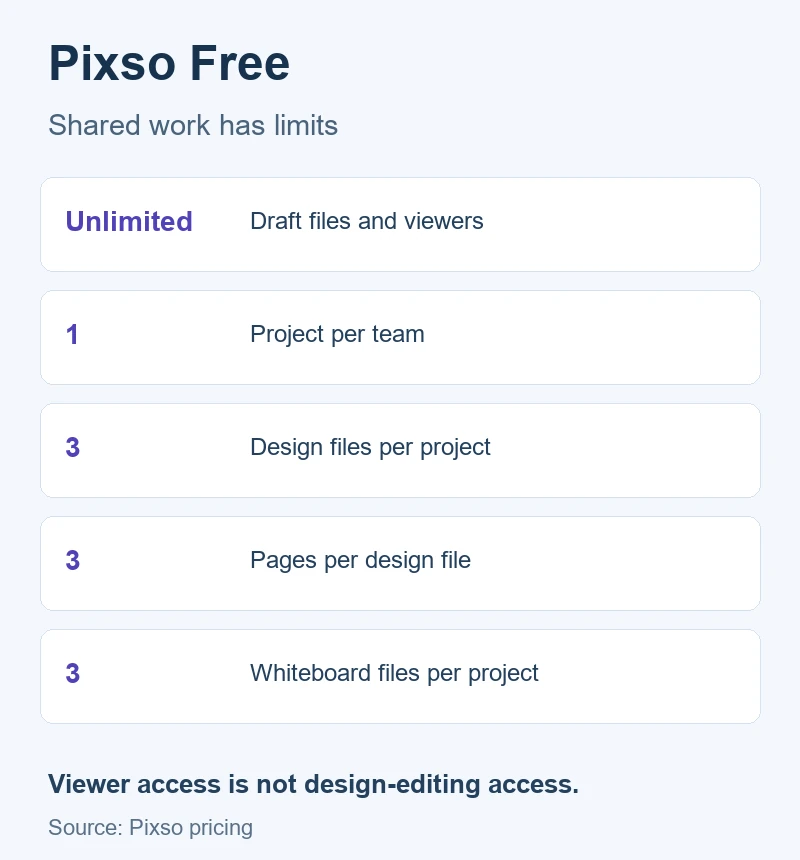
For history and reuse, Figma Starter’s 30-day history and absence of team libraries are concrete limits. Compare those with the Pixso workspace you will actually use. For developer work, Figma Starter does not include Dev Mode; Pixso’s inspection and D2C access also depend on the relevant plan and seat. Do not equate a free viewer role with paid development capabilities.
For an international team, test the actual editor language and the terminology used by colleagues. Both products support multiple languages, but a translated marketing page does not prove that every editor feature or help article is available in that language. Share the same prototype with the intended reviewer to check that language and access work together.
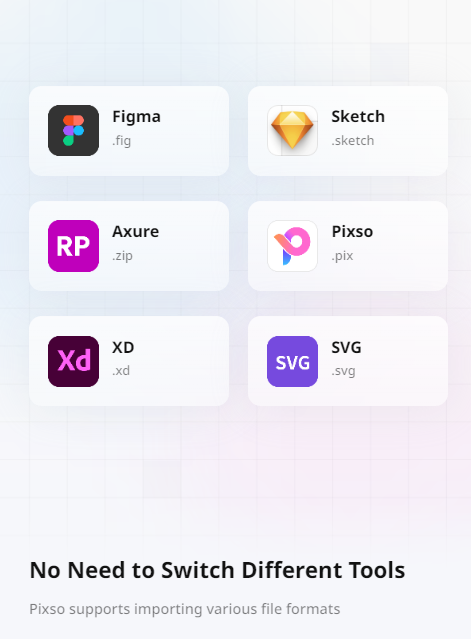
Pixso documents Figma, Sketch, Adobe XD and Axure import workflows. Import a copy of a representative file and compare text, component relationships, images and prototype behavior. A supported file extension is not a promise that comments, history or every source feature migrate unchanged; a ZIP archive is not a universal interchange format.
Example: one designer, one developer and two reviewers
Suppose the team maintains two shared Design files for a booking flow and one FigJam board. It has no shared component library, and 30 days of history is sufficient. That file setup fits Starter’s documented categories; invite the two reviewers with the access their task requires and verify the prototype link.
| Requirement changes | Consequence | Decision to make |
|---|---|---|
| The developer needs Dev Mode. | Starter does not include it. | Compare paid Dev access with the actual inspection and handoff workflow required. |
| A fourth shared Design/Sites file is needed. | The shared-file allowance is exceeded. | Reorganize only if it preserves usable work; otherwise compare a suitable paid plan. |
| The designer needs a reusable team library. | Starter has no team libraries. | Budget for library access and decide who owns updates. |
| The two reviewers only view and comment. | They do not have the same task as the designer. | Keep review permissions separate from paid design-editing or development requirements. |
Run the equivalent booking file in Pixso before switching: import a copy, inspect one reused control, share the prototype with both reviewers and ask the developer to find the approved state. Record any repair work and the required roles. This is a comparison exercise, not a measured claim that migration is faster or cheaper.
Choose the plan that lets the team finish the work
Figma Starter can be enough when the shared files, permissions and feature needs fit its limits. Upgrade when a specific missing capability justifies it, or test the same workflow in Pixso before moving. Keep the decision tied to editable files, review access and maintainable handoff rather than assuming either free plan has no restrictions.