Scott
B2B companies do not choose private-deployment design tools simply because "on-premise is safer." The decision often comes from customer contracts, supplier-risk policy, intellectual-property sensitivity, network restrictions, identity requirements, or the need to integrate design work with internal engineering systems. Procurement succeeds when those constraints become testable requirements.
Part 1. Identify the Business Trigger for Private Deployment
Start with the obligation that a cloud service cannot currently satisfy, not a general preference for owning servers. Common triggers include:
- customer contracts that restrict where confidential product information is stored or processed;
- unreleased hardware, automotive, industrial, defense, or financial interfaces with high IP sensitivity;
- corporate networks that limit public SaaS access;
- central identity, audit, retention, or incident-response requirements;
- internal DevOps, R&D management, or asset-governance integrations;
- business-continuity requirements for unreliable external connectivity; and
- an exit strategy that requires controlled export and deletion.
Write each trigger as an outcome. "All confidential design content and backups must remain in the approved infrastructure" is testable. "Must be on-premise" is only a proposed solution.
Part 2. Convert the Trigger into an RFP Requirements Matrix
| Area | Question | Required evidence |
|---|---|---|
| Deployment | Which single-node, clustered, intranet, or private-cloud topologies are supported? | Versioned architecture and network-flow diagram |
| Identity | How are employees, guests, service accounts, and administrators managed? | Role matrix and live joiner-mover-leaver test |
| Data | Where do files, metadata, logs, backups, and support records go? | Data inventory and egress test |
| Operations | Who patches, monitors, backs up, restores, and responds to vulnerabilities? | Responsibility matrix and runbooks |
| Workflow | Can the platform support design systems, review, versions, and handoff? | Representative project demonstration |
| Exit | How are content, assets, audit records, and identities exported or deleted? | Exit procedure and tested export |
Classify requirements as mandatory, scored, or informational. A mandatory control should be pass or fail; do not allow attractive design features to compensate for an unmet contractual requirement.
Require vendors to answer in a controlled format: supported, configurable, planned, custom, partner-provided, or unsupported. Ask for a documentation link, product version, plan, dependency, and person accountable for the answer. This prevents a sales demonstration from being recorded as a contractual capability.
Part 3. Perform Supplier and Software-Lifecycle Due Diligence
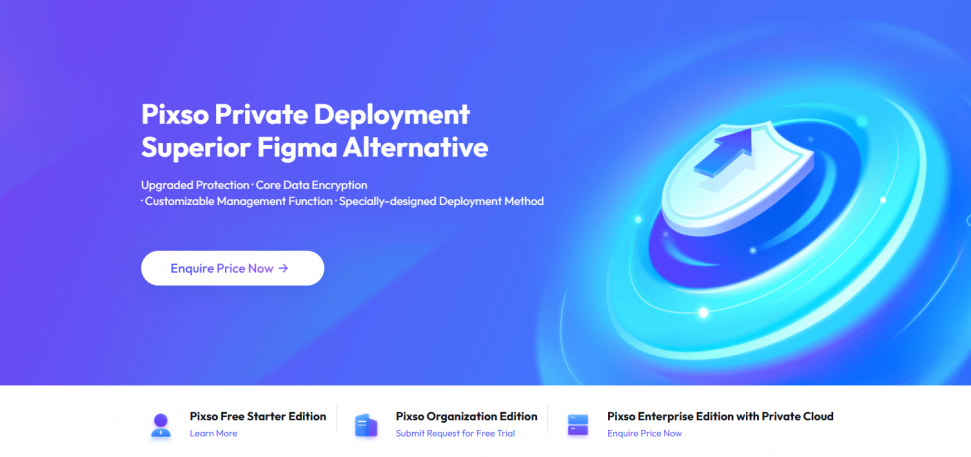
Private deployment does not eliminate supplier risk; it changes it. The vendor still provides application code, updates, support, documentation, and sometimes installation services. NIST CSF 2.0 gives supply-chain governance greater emphasis and recommends due diligence before entering supplier relationships and ongoing monitoring across the relationship.
Ask how the vendor handles secure development, third-party dependencies, vulnerability reports, severity and remediation timelines, release signing, support lifecycle, end-of-life notice, administrator access, and incident communication. For self-hosted open-source software, review repository activity, maintainers, dependency processes, release cadence, and the internal resources needed to operate or fork it.
Require an asset inventory for the deployed solution: application services, containers or packages, databases, object storage, search, caches, message queues, identity connectors, mail, monitoring, and external endpoints. Ownership must be clear for each element.
Part 4. Negotiate the Operating Model, Contract, and Exit
A private instance needs a lifecycle after installation. Define who approves architecture, provisions infrastructure, manages certificates and secrets, performs upgrades, validates backups, monitors logs, handles incidents, and contacts support. Schedule upgrade rehearsals and restore tests before production.
The contract should align with the operating model. Cover supported versions and platforms, service levels, vulnerability communication, remote-support approval, data handling, subcontractors, custom-code maintenance, change notification, audit evidence, and termination assistance. Avoid promising legal compliance from product features alone; map controls with security and legal specialists.
Exit planning requires evidence, not just a contract clause. Export a representative project, libraries, assets, and relevant records. Document what is portable, what loses behavior, how identities are removed, how backups expire, and how the organization can verify deletion or decommissioning.
Set decision checkpoints before negotiation changes the scope: requirements approval, architecture approval, security review, POC acceptance, commercial approval, and production readiness. Keep exceptions visible. A custom integration that is promised after signature should have a specification, acceptance test, maintenance owner, delivery milestone, and remedy if it is late.
Part 5. Run a Pixso Private Deployment Vendor Workshop
The Pixso Private Deployment page describes single-node and clustered deployment, intranet and private-cloud methods, permission and member management, activity logs, shared enterprise resources, and customization for R&D management and DevOps connections. Use these as workshop topics, not automatic acceptance evidence.
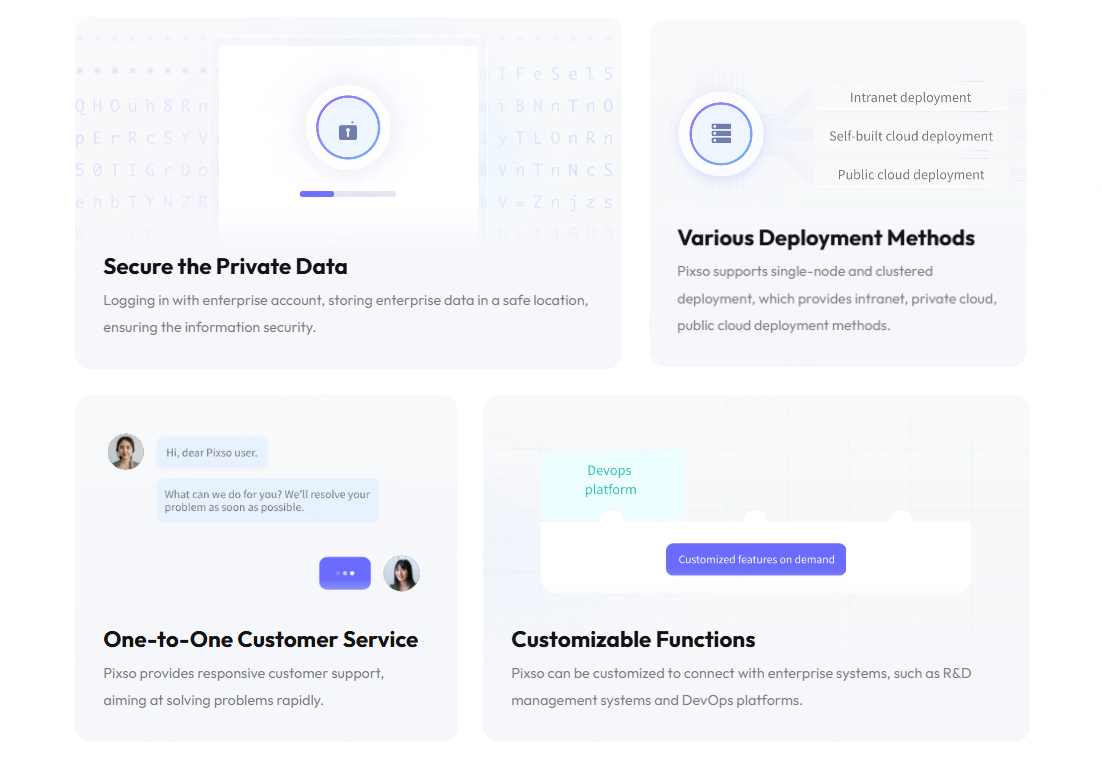
Bring product design, engineering, security, procurement, infrastructure, and support owners to one session. Walk through the architecture, responsibility matrix, identity roles, data flows, update process, backup and restore, log export, support access, and customization boundaries. Then run a real workflow on the Pixso design platform: import or create a UI file, publish a component, review comments, preserve a version, share an interactive demonstration, and hand specifications and assets to a developer.
The workshop output should be a gap list with owners, evidence, target dates, and contract dependencies. Only requirements demonstrated in the proposed environment should be marked complete.
After selection, convert RFP answers into operational controls. Add the platform to asset inventory, supplier review, vulnerability notification, backup testing, access review, incident exercises, and business-continuity planning. Procurement closes the purchase; it does not close the risk.
Part 6. B2B Private Deployment FAQ
Q1. Why do B2B companies request on-premise design tools?
Typical drivers are customer contracts, IP sensitivity, network restrictions, identity and audit requirements, internal integration, continuity, and exit control. The exact trigger should be documented.
Q2. What is the first question in an RFP?
Ask the vendor to describe the supported deployment topology and every data flow, including licensing, updates, telemetry, plugins, email, AI, backups, and support.
Q3. Should design features or security controls be evaluated first?
Define mandatory security and contractual gates first, then compare workflow quality among candidates that pass. The final proof of concept must test both.
Q4. Does private deployment remove vendor risk?
No. The organization still depends on vendor code, updates, documentation, and support. Evaluate secure development, vulnerability handling, release integrity, lifecycle, and termination.
Q5. What should a Pixso proof of concept include?
Include the proposed private topology, enterprise identity roles, logs, backup and restore, an upgrade rehearsal, large design files, team libraries, comments, versions, interactive demonstrations, and developer handoff.
Q6. Who should approve the final decision?
The accountable business owner should decide with documented input from design, engineering, security, privacy or legal, procurement, infrastructure, records management, and support teams.