Scott
The shift to collaborative, cloud-based design systems has accelerated software development. However, for organizations managing highly confidential user data, financial backends, or corporate intellectual property, storing all design assets on public cloud servers introduces risks. While figma enterprise has built solid operational security, its strictly multi-tenant cloud framework can create friction for security officers. To achieve true compliance and data sovereignty, technology leaders are actively seeking on premise deployment alternatives. This guide analyzes the limits of cloud-hosted vector design environments and demonstrates how Pixso provides a robust, self-managed alternative that places intellectual property protection at the center of the product development lifecycle.
Part 1: Pixso: The Enterprise-Grade Secure Design Alternative
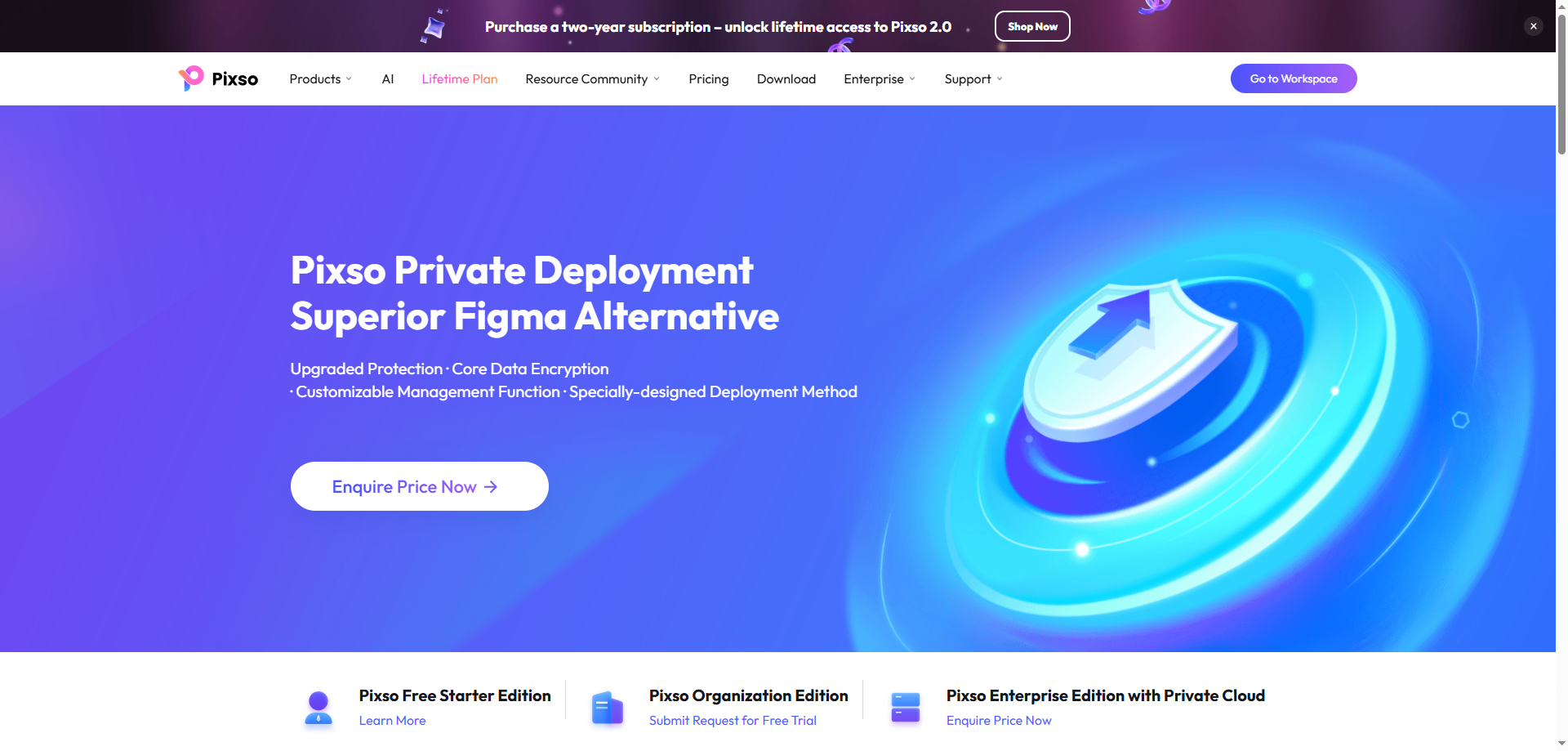
As organizations scale their design and engineering teams, maintaining security while promoting collaboration becomes increasingly complex. Pixso is an advanced collaborative design platform built to deliver professional UI/UX design, interactive prototyping, and developer handoff. Unlike standard cloud-only tools, Pixso was designed from the ground up to support secure enterprise infrastructures, offering dedicated on premise deployment alongside flexible hybrid options.
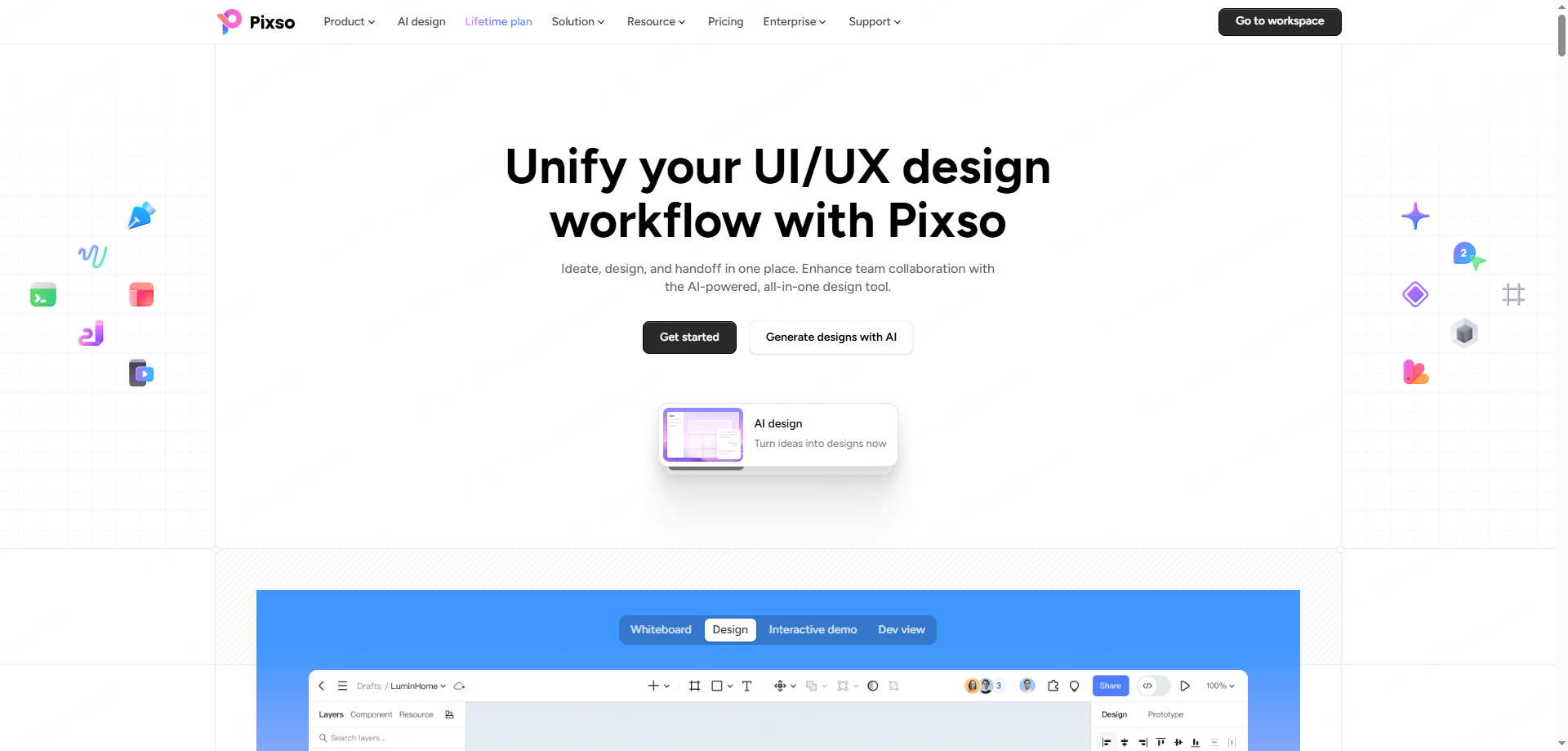
By housing the entire design workflow within a private environment, Pixso helps organizations eliminate the risks associated with public cloud hosting. It ensures that your files, user activity records, and design libraries remain entirely under your control.
Rather than forcing organizations to assemble a patchwork of external subscriptions, Pixso provides a comprehensive workspace that keeps your design systems, user flows, and code files secure.
Part 2: Security and Compliance Limits of Figma Enterprise
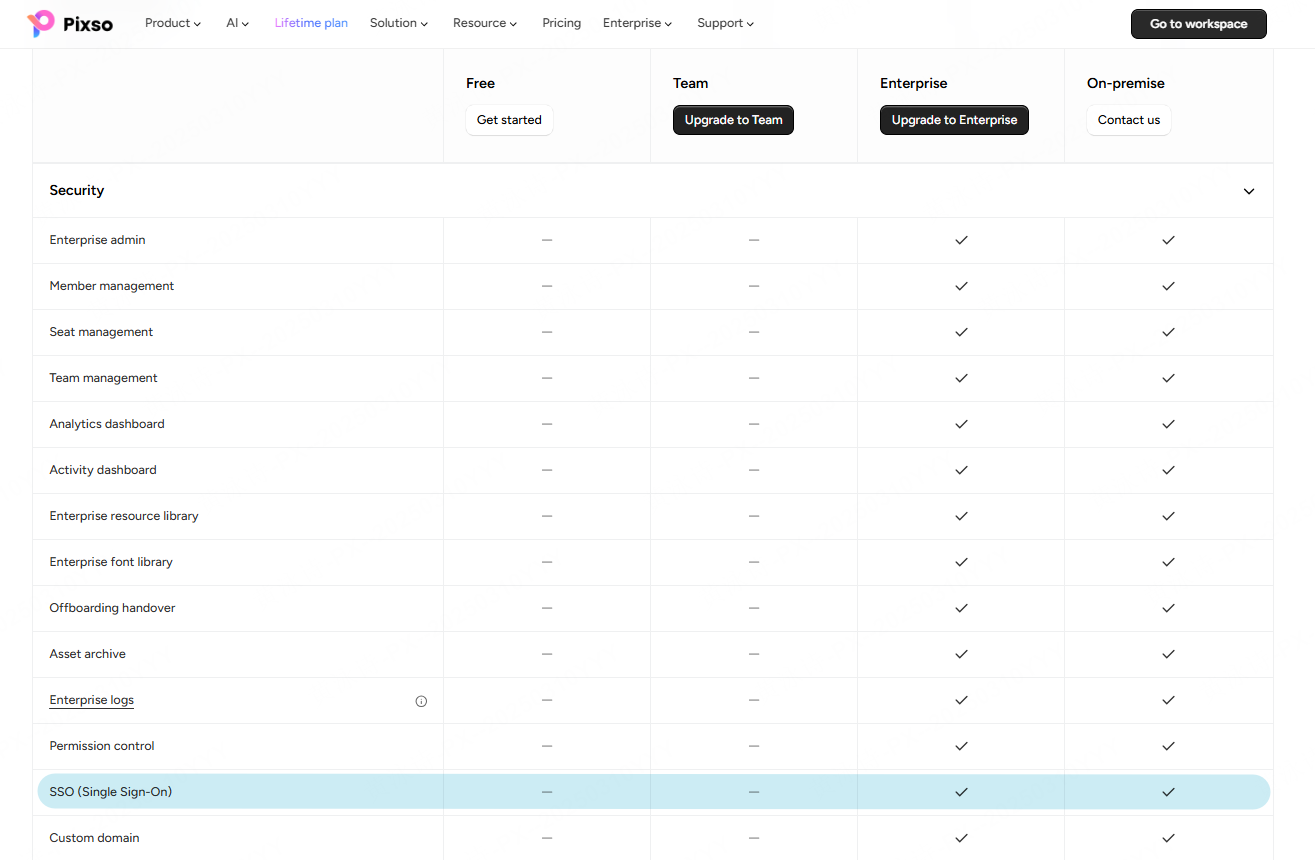
For many scaling corporations, figma enterprise serves as the default choice for large-scale design workflows. It provides valuable administrative tools, including Single Sign-On (SSO), domain capture, and basic design system management. However, when evaluated against strict corporate security standards, several structural limitations become apparent.
The Cloud-Only Infrastructure Gap
The primary limitation of the platform is its cloud-only hosting model. Because all design files, components, and project assets are saved to multi-tenant public cloud databases, companies must trust third-party hosts to protect their proprietary layouts, database structures, and pre-release interface concepts. For organizations operating in highly regulated fields like banking, defense, or healthcare, sending sensitive assets to external networks can violate strict data residency requirements.
AI Model Processing and Security Risks
As generative AI features become more common in design software, protecting corporate IP has grown increasingly difficult. When design teams use public, cloud-based AI generation tools, their prompts, layouts, and wireframes are often sent to external servers for processing. This raises the risk of accidental leaks, as these external models may train on corporate inputs. For compliance teams, this makes intellectual property protection exceptionally difficult to maintain, forcing secure businesses to search for on premise deployment alternatives.
Part 3: Financial Realities: Analyzing Figma Enterprise Pricing
Along with security concerns, managing subscription costs is another key challenge for enterprise technology leaders.
The Cost of Scaling Large Teams
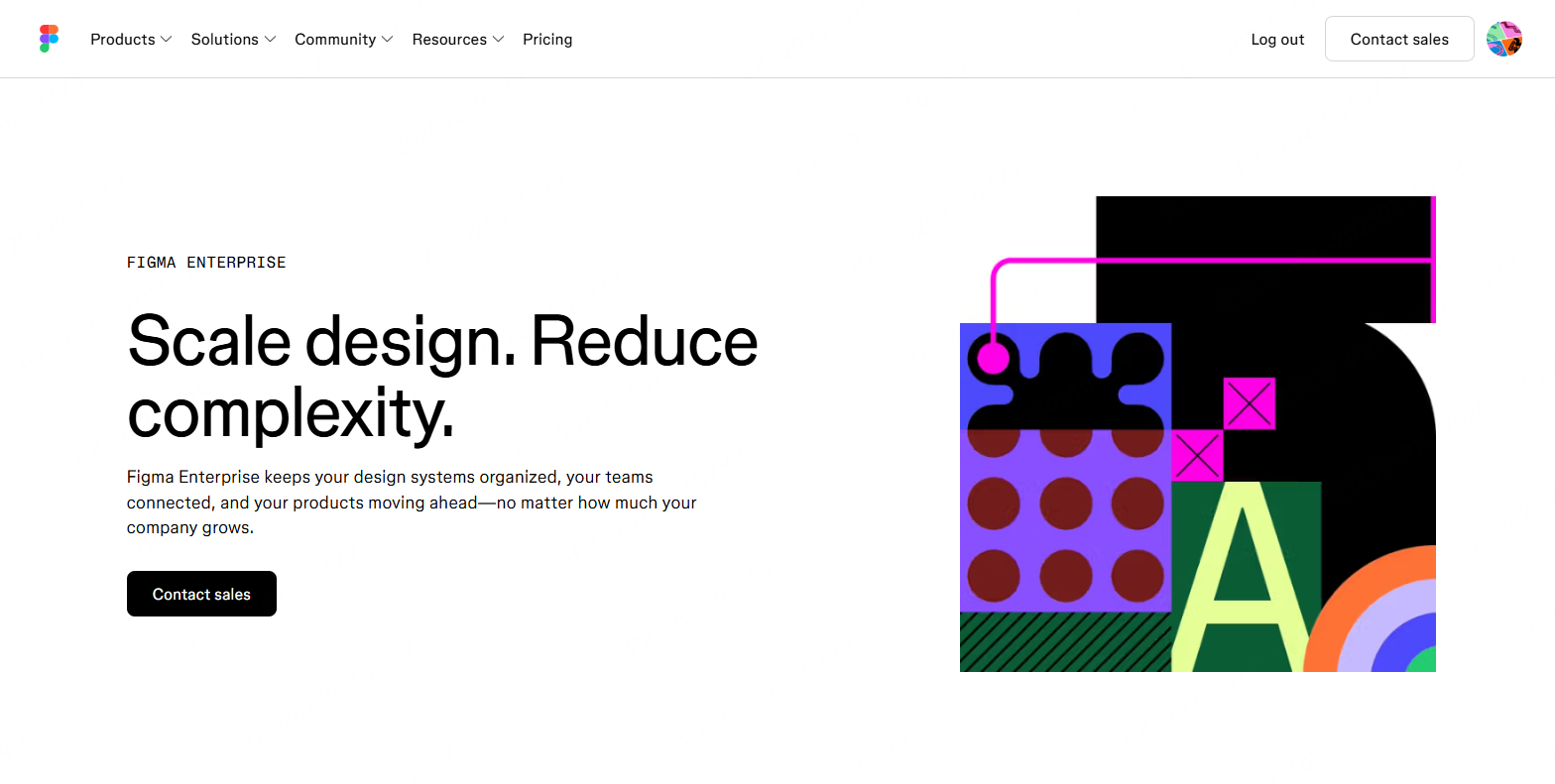
While standard tiers are affordable for small startups, figma enterprise pricing is structured as a premium, per-seat subscription. As an organization scales and adds designers, product managers, front-end developers, and external agencies to the workspace, these monthly licensing fees can quickly escalate into a substantial recurring expense.
The True Cost of External Collaboration
The per-seat billing model of figma enterprise pricing can discourage cross-functional collaboration. Because every developer or observer who needs access to inspect code or review mockups might require a paid seat, licensing costs scale up quickly.
To bypass the recurring overhead of figma enterprise pricing, organizations are increasingly turning to Pixso’s buyout licensing model. Pixso offers perpetual, buyout-style private licensing. This model eliminates recurring subscription inflation, allowing large organizations to scale their user base freely without facing unexpected financial penalties.
Part 4: Solving Deep Security and Compliance Needs (The Private Framework)
Transitioning to a private, self-managed design workspace allows technology leaders to build a secure framework that protects sensitive corporate data while supporting team productivity.
By prioritizing secure architecture, organizations can address compliance, access control, and threat prevention in three key areas.
1. Local Private Loop for Data Sovereignty and IP Safety
A true on premise deployment ensures that all design assets, collaboration logs, and user data remain entirely within your secure network or virtual private cloud (VPC). This localized system means that:
- No External Data Transfers: All files, assets, and project data are stored locally, with zero transmission to external servers.
- Offline AI Inference: AI design generation, layout drafting, and prompt processing occur locally on internal servers, keeping your proprietary design data secure and isolated.
- Full Data Sovereignty: Your security teams retain complete control over file storage, access permissions, and data transfer rules.
2. Full-Link Compliance Audit for Global Regulation
Operating across international markets requires adhering to strict data regulations. Pixso features immutable activity logs, local data residency options, and lifecycle management for confidential files. This comprehensive tracking system allows organizations to satisfy compliance audits for standards like GDPR, HIPAA, and ISO27001, shielding the company from cross-border data transfer penalties.
3. Enterprise-Grade Granular Permissions and Leak Prevention
Collaborating with external contractors and remote teams requires strict access management to prevent data leaks.
- SSO Integration: Seamlessly syncs with your corporate Single Sign-On (SSO) and LDAP identity providers.
- Role-Based Access Control: Allows administrators to restrict file and project access based on custom user roles.
- Dynamic Data Protection: Features visual watermarking, restricted layout downloads, and expiring share links to protect mockups during external collaborative design reviews.
Part 5: Hybrid Tiered Deployments and Uncompromised AI Features
Every department in a modern enterprise has different operational requirements. While marketing and content teams might prioritize fast, cloud-based tools, core product engineering teams working on secure portals or financial databases require maximum protection.
Flexible Hybrid Deployment
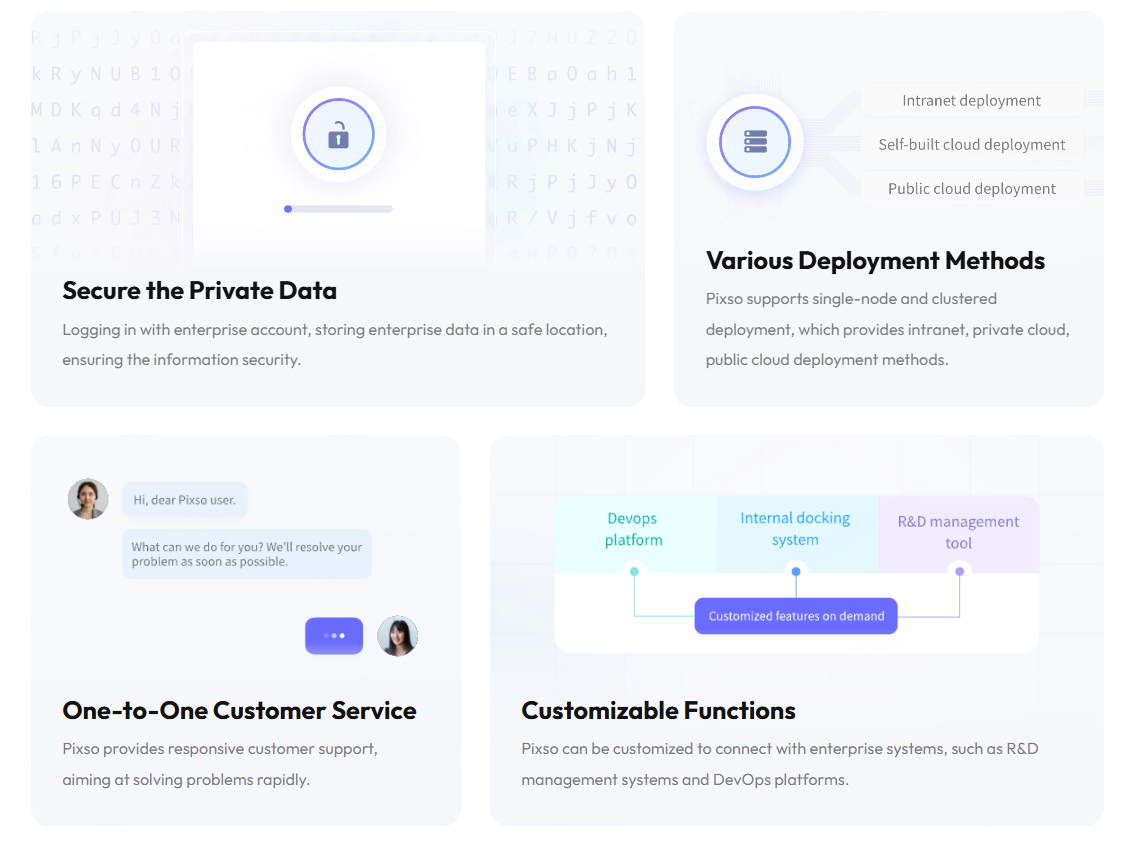
Pixso accommodates these mixed workflows through a flexible hybrid deployment model. Organizations can deploy a public cloud instance for non-sensitive public projects and a localized private instance for confidential, high-security systems. This dual architecture keeps your most sensitive product designs safe within your local network while letting auxiliary teams collaborate on the public cloud, with secure channels available to sync assets between the two environments.
Full AI Capability on Private Servers
A common issue with on-premises software is that advanced features are often stripped out due to the lack of external cloud connections. Pixso prevents this compromise by keeping its core design and AI capabilities fully functional in private, local environments.
Your teams can use AI-assisted UI design, build high-fidelity interactive prototypes, and export clean development code without relying on external internet networks. This ensures that secure, on-premises environments perform just as fast as public SaaS setups.
Self-Managed Operations and Long-Term Value
By deploying your design platform on private servers, you gain complete ownership over your workflow and data.
- No Vendor Lock-In: Export all your design assets, component libraries, and project histories at any time in non-proprietary formats.
- Independent Upgrades: Maintain full control over when to update your software, avoiding unexpected changes or feature removals.
- High Reliability: Safeguard your development pipeline against external cloud server outages, third-party internet disruptions, or sudden platform access blocks.
FAQ
Selecting the right collaborative tools requires balancing user productivity with strict corporate security. Here are answers to common questions about deploying Pixso within private networks.
Q1: How does a secure on premise deployment protect our AI data compared to figma enterprise?
When using figma enterprise, AI prompts and design files are processed on public cloud servers, which can raise compliance concerns for sensitive industries. With Pixso’s secure private deployment, all AI generation, layout drafting, and data rendering run locally on your internal servers. No prompts or assets are sent to external systems, ensuring complete data privacy and intellectual property protection.
Q2: Will our team lose access to advanced UI tools or interactive prototyping if we deploy Pixso locally?
No. Pixso maintains complete feature parity across all deployment models. Your secure local instance retains access to all advanced vector design tools, collaborative workflows, interactive prototyping, developer handoff assets, and AI-assisted generation features without any performance degradation.
Q3: How does Pixso's buyout pricing compare to figma enterprise pricing over the long term?
Figma enterprise pricing is structured as a per-user, monthly or annual subscription that can grow rapidly as you add more designers, developers, and reviewers. Pixso offers perpetual, buyout-style licensing for private deployments. This predictable model eliminates recurring subscription fees, allowing large organizations to scale their user base freely while optimizing their long-term software budget.
Q4: Is Pixso's hybrid architecture difficult to manage for standard corporate IT departments?
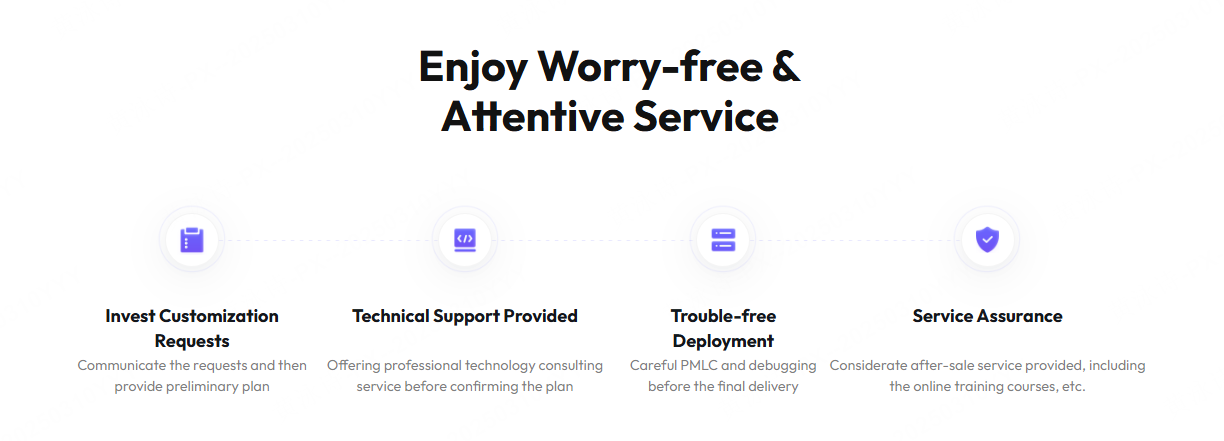
No. Pixso's private deployment is designed to be highly compatible with standard corporate IT infrastructures, supporting standard Docker containers and Kubernetes clusters. It integrates smoothly with your existing SSO networks, database backups, and internal monitoring systems, making it simple for your IT teams to manage and maintain.
Conclusion
Balancing design velocity with strict data governance is a critical objective for modern technology leaders. While public cloud tools offer smooth collaboration, they present compliance and security risks for organizations handling sensitive intellectual property. Choosing an on premise deployment alternative allows companies to secure their creative workflows without sacrificing feature richness or team collaboration. Pixso provides a robust, compliant, and cost-effective framework that delivers high-performance vector design, interactive prototyping, and secure AI generation directly within your private network. Transitioning your design system to a self-managed, localized workspace protects your corporate assets and gives you full control over your digital future.


![[NEW] How to unblur images & sharpen portrait photos with AI](https://pixso.net/assets/media/unblur-images-9181e03d97cfd9712007-77af57af1809dcce.webp)