Scott
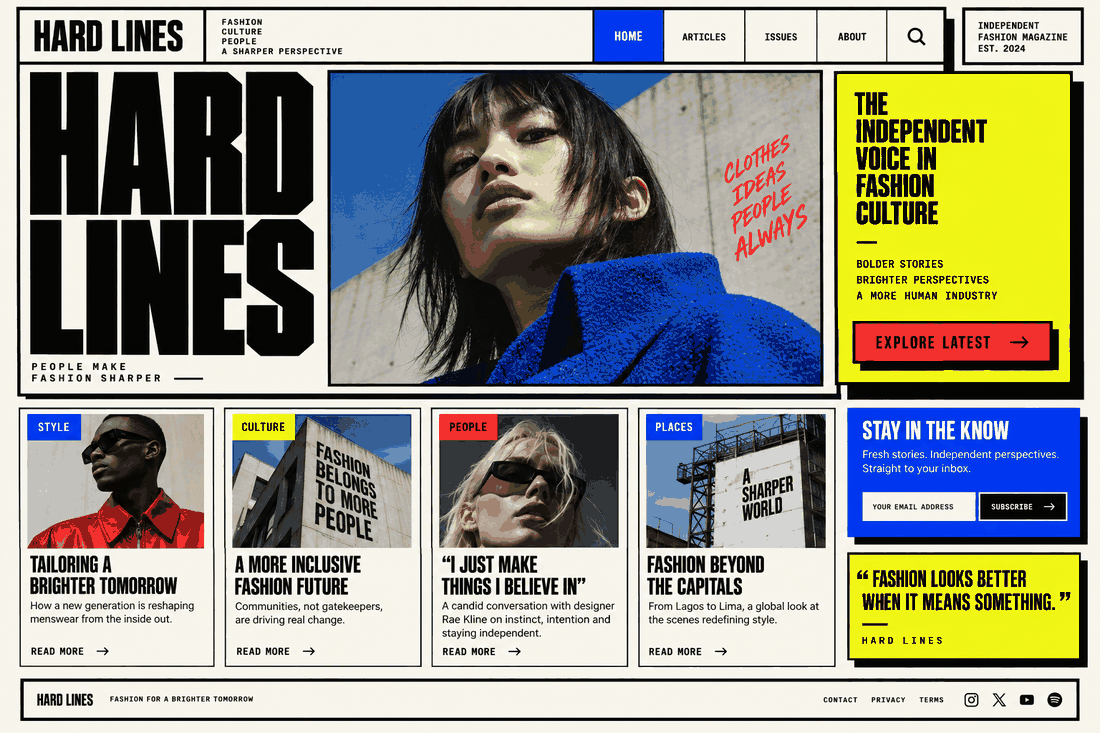
Let’s be honest: the internet has become incredibly boring. Everywhere you look, it’s the same soft shadows, the same rounded corners, and the same "safe" minimalist layouts. We’ve reached a point of total aesthetic exhaustion. This is exactly why neo brutalism is making a massive comeback as we look toward 2026. It’s a loud, high-contrast, and unapologetic middle finger to the "blandness" of modern AI-generated designs. But it isn't just about being messy; neo-brutalism design trends in 2026 are about a strategic rebellion. It’s for the brands that actually want to be remembered in an era where every SaaS landing page looks like a carbon copy of the next.
Part 1. Why Pixso is the best bet for Neo-Brutalism
Executing a neo brutalism web design is actually a lot harder than it looks. If you get it wrong, the site just looks broken. You need a tool that handles high-contrast borders and clashing colors without slowing you down. This is where Pixso really proves its worth. Since it’s a browser-based, collaborative canvas, it’s the perfect playground for experimenting with radical layouts.
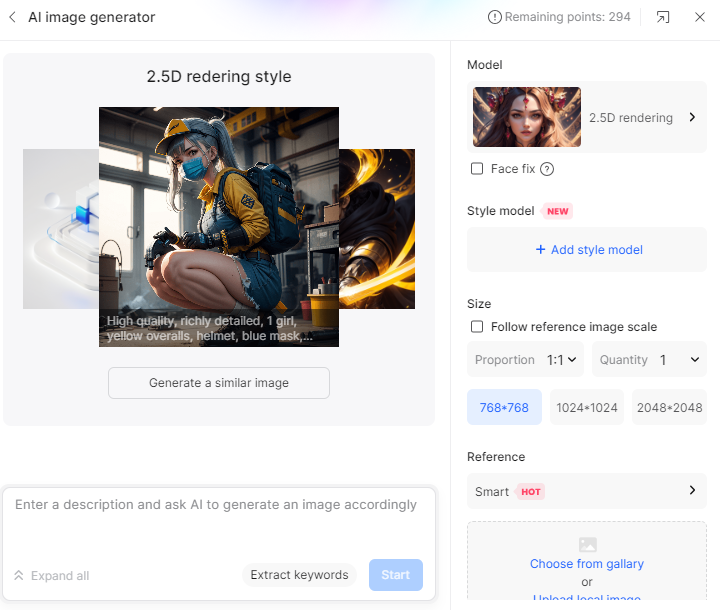
Pixso's AI features are useful here. Usually, building a "raw" aesthetic from scratch takes forever—you’re manually setting 4px strokes on everything and fighting with layout grids. With Pixso’s AI features, you can generate the foundations of a neo-brutalism ui in seconds. Whether you need the AI to whip up some "intentionally clashing" color palettes or generate a set of custom icons that fit the bold, thick-line vibe, it handles the grunt work. This leaves you free to focus on the actual creative ui design. Because it's all in the cloud, you can invite your team to tear apart your drafts in real time, ensuring that "bold" doesn't turn into "unusable."
Part 2. Neo Brutalism vs Brutalism: Finding the balance in 2026
To pull this off, you have to understand the history. When we talk about neo brutalism vs brutalism, we’re talking about two very different animals. Original brutalism (from the 1950s) was all about raw concrete and being "ugly" on purpose. In web design, that usually translates to unstyled HTML and a terrible user experience.
Neo brutalism takes that raw energy but makes it fun. It’s "Brutalism 2.0." In the context of neo-brutalism design trends in 2026, the vibe is more like a comic book or a high-end fashion zine.
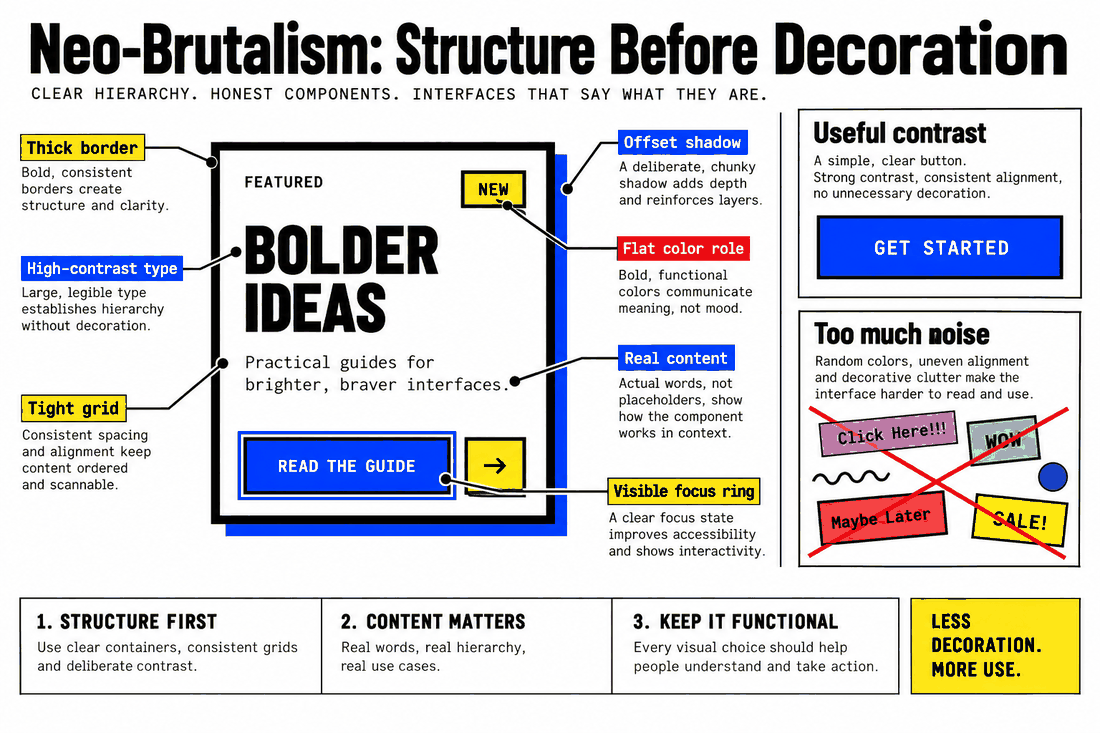
- The Colors: Forget "safe" blues. We’re talking high-saturation yellows, hot pinks, and lime greens.
- The Shadows: No more soft, blurry blurs. We want hard-edged, pitch-black shadows that pop.
- The Lines: Thick, 2px to 5px borders around everything. It makes the UI feel tactile and physical.
Understanding the difference in neo brutalism vs brutalism is what keeps your site from looking like a mistake. You want the "honest" feel of brutalism but with the buttery-smooth micro-interactions of a modern web app.
Part 3. Standards and methodologies: Avoiding the "AI Homogenization" trap
The biggest risk in 2026 is that AI design tools tend to "average out" creativity. If you ask a generic AI for a "modern website," it gives you a template. To beat this, you need a standardized approach to neo brutalism design that keeps things original.
You have to eat, sleep, and breathe the four sub-genres of this trend:
- Pop-Brutalism: High-energy, loud, and great for brands that want to trend on social media.
- Technical-Brutalism: Clean lines, monospaced fonts, and a "blueprint" feel—perfect for dev-tools.
- Organic-Brutalism: Using paper textures and "rough" edges to feel more human.
- Commercial-Brutalism: A toned-down version for SaaS that uses bold accents without scaring off the CEO.
By using Pixso’s Design System Management (DSM), you can lock these rules in. You build a "Brutalism Playbook" right in the cloud. This means your team isn't just guessing how thick a border should be; they’re using private tokens and components that keep the brand’s visual identity sharp across every single page.
Part 4. Precision handoff: Making sure it works in code
A bold neo brutalism web design is only good if the developer can actually build it. The problem with this style is that it often uses weird offsets and specific textures that are a pain to code.
Pixso solves this with a focus on efficient delivery. If you’re a fan of Tailwind CSS (and who isn't in 2026?), Pixso is a lifesaver.
- Tailwind Integration: You can export styles that map directly to Tailwind’s utility classes. No more guessing at shadow offsets.
- Texture Exporting: If your design uses a grainy or "paper" texture, Pixso ensures these are exported in optimized formats so your site doesn't take five minutes to load.
- Live Specs: Developers don’t need to ask you "How big is this stroke?" They just click and see the code. Clear specifications can reduce follow-up questions about the design.
Part 5. Sector-specific rules: From finance to fashion
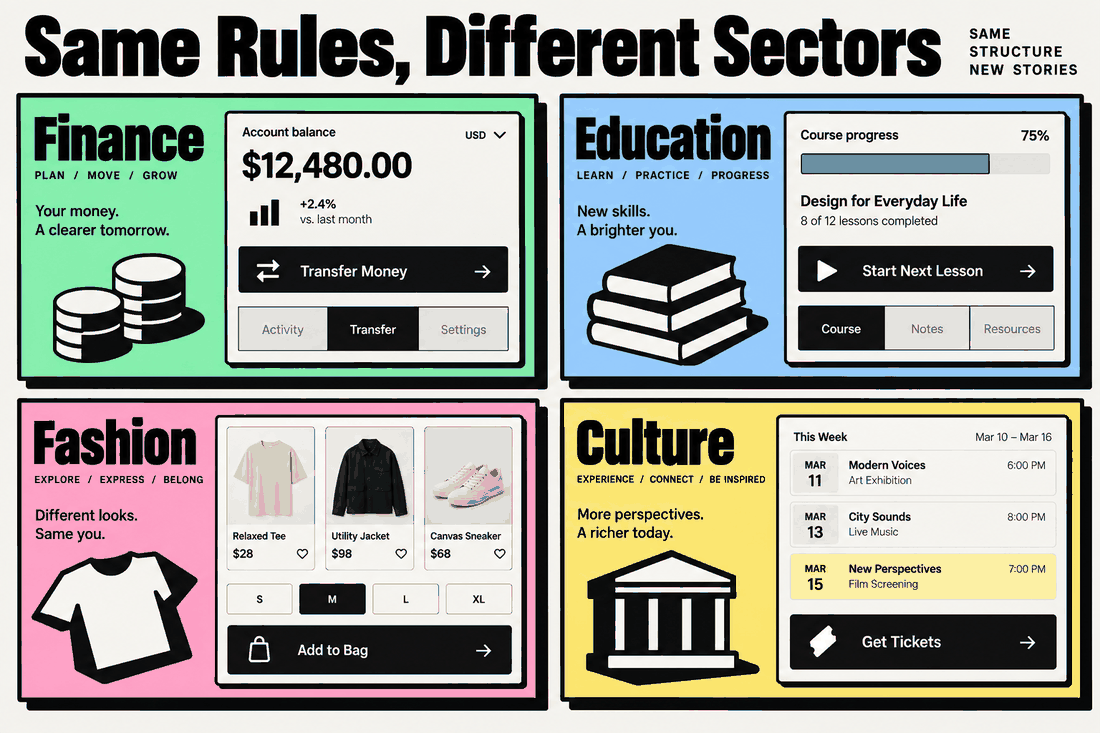
One of the mistakes designers make with neo brutalism is trying to use it the same way for every client. That’s a fast track to a failed project. You have to adapt the "heaviness" of the style to the industry.
- For High-Stakes SaaS (Finance/Medical): Keep the neo-brutalism ui elements light. Use the bold borders for buttons or headers, but keep the typography clean and highly readable.
- For Fashion & Lifestyle: Go full-on. Use the clashing colors and asymmetric layouts to create a memorable, artistic experience.
- For Cultural Projects: Use "Organic" textures. Pixso’s private resource libraries are great for storing these specific "styles" so you can switch gears between a bank and a band’s website in the same afternoon.
This differentiation is what makes you a pro. You’re using the neo brutalism design to solve a specific problem, not just because it looks cool.
Part 6. Solving the mobile mess: Lightweight responsive solutions
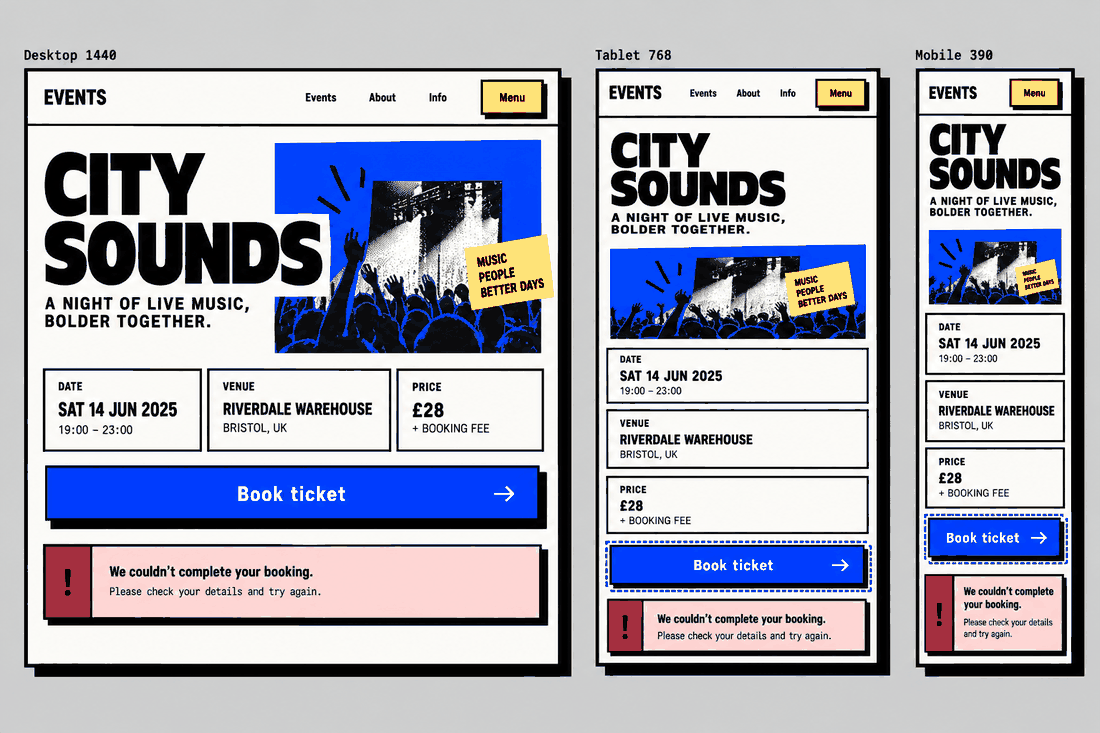
We’ve all seen it: a beautiful, bold desktop site that looks like a car crash on a phone. When you have giant text and overlapping boxes, mobile layouts get tricky fast.
This is where you have to be smart about responsive rules. In Pixso, you can set up "Lightweight Response" strategies:
- Scaling Borders: Maybe that 4px border on desktop needs to be 2px on a 6-inch screen so it doesn't crowd the content.
- Type Hierarchy: Use Pixso’s auto-layout to ensure your massive headings don't break the container on mobile.
- Simplified Textures: Sometimes, you want to drop the heavy textures on mobile to keep the performance high and the UI clean.
Because Pixso handles cross-device syncing so well, you can test these "mobile-first" brutalist rules in real time. It’s about making sure the "boldness" works for everyone, not just people with giant monitors.
Part 7. Why originality is the only way forward
As we move into the late 2020s, "good enough" design is being automated away. If you’re just making clean, white-space-heavy websites, an AI can do your job for you. To stay relevant, you have to offer something the machine can’t: a point of view.
Neo brutalism is a point of view. It shows that there’s a human behind the screen making choices, sometimes weird choices, but always intentional ones. By mastering neo brutalism vs brutalism and using a tool like Pixso to keep your team synchronized, you’re positioning yourself as a designer who can handle "Creative UI Design" at a high level.
Conclusion
The rise of neo-brutalism design trends in 2026 isn't just a phase; it’s a response to a digital world that has become too predictable. Brands are desperate to stand out, and this bold, high-contrast aesthetic is the perfect way to do it. But remember, boldness without a plan is just a mess. Use Pixso to build your design systems, leverage those AI skills to move faster, and make sure your dev handoff is as sharp as your borders. The web is ready for something different. It’s time to stop playing it safe and start building something that people will actually remember five minutes after they close the tab. Whether you’re diving into a neo-brutalism ui for the first time or you’re a seasoned pro, the goal is the same: make it bold, make it usable, and make it original.