On this page

Degter Gregory, Head of Design and Research Office, Kaspersky Lab
Introduction: about Kaspersky and the reasons for migration
Kaspersky (Kaspersky Lab) is a global leader in cybersecurity, founded in 1997. With revenue of $836 million at the end of 2025 and a presence in more than 200 countries, the company develops highly complex solutions, from endpoint protection to comprehensive enterprise security with the provision of XDR and Threat Intelligence. For a corporation of this scale, seamless synchronization between product, analytics, and engineering teams is critically important.
However, at the end of 2025, the company faced a force majeure: Figma notified them about the closure of their corporate account, leaving only 7 days to save thousands of mockups.
In this situation, the company urgently transferred its global design team to Pixso. The choice was not random: the tool had been tested in advance.
Among the functionality used by the Kaspersky team are design tokens, API customization, and built-in AI.
This was not just a software replacement, but an extreme test of business continuity. How did they manage to transfer thousands of files without disrupting a single release? We hand the floor to the author of the case study — Grigory Degter, Head of the Product Design Department at Kaspersky.
First-person perspective: chronicle of an emergency migration
Hello! My name is Grigory, and I lead the product design department at Kaspersky. I want to tell a story that started as a force majeure, continued as a management challenge, and ended as a good training exercise that allowed us to test the stability of our processes, the strength of our team, and the reliability of our new technological partners.
In this post, I want to share our experience of emergency migration, talk about the difficulties we faced, the ways we found to overcome them, and how, in the process of the forced replacement of our usual tool, we found technological partners ready to change to suit our tasks and grow with us.
Crisis: Sudden Disconnection
Like most product teams on the market, we designed interfaces in Figma. Design systems, component libraries, developer handoff processes, plugins, process synchronization, everything had been built in Figma over the past five to six years, everything worked stably and ensured the speed of product releases. But one night, this stability was shaken.
On the night of November 21-22, 2025, we received a notification from Figma about the termination of cooperation and that access to our corporate account would be closed in a week.
Of course, we perfectly understood and assessed the existing risks, and had begun to study alternatives in advance. A few years ago, we started testing different solutions and came to the conclusion that the closest option in terms of the functionality we needed would be Pixso, so we purchased test licenses to evaluate its capabilities. A plan was outlined, but we were in no hurry to make a decision about a preemptive replacement of our main working tool. Such a change in processes really requires a final trigger.
But let's return to November 2025. After receiving the message from Figma, our actions could be divided into several stages.
Stage 1: Damage Minimization
We work in the field of information security, so we know firsthand about the importance of proactive measures to protect internal systems from threats. Under force majeure conditions, we launched an unscheduled backup process, as it was important to save working files and libraries as quickly as possible.
It doesn't sound that difficult. But when you have a department responsible for the design of dozens of products of varying complexity, working with more than a thousand files, the task becomes not so simple. In the company, not only product designers used Figma. It was a single tool for branding, marketing, social media, analyst, and localization teams as well. This results in quite a large number of users and hundreds of files.
And the cherry on top — Figma does not allow downloading more than 50 mockups without entering a CAPTCHA… At that moment, we mentally multiplied this limitation by the number of our mockups, and realized with horror that a colossal amount of time would be needed, measured not even in hours, but in days. Postponing until the last day was simply impossible.
Already on Saturday, we started backing up our working files. Each designer was responsible for the backup of their product, and the design lead checked all the backups. In addition, our department organized a general meeting and a chat for all Figma users in the company. A member of our team even quickly created a script that automated the downloading of files (it still didn't allow bypassing the CAPTCHA, but at least the first 50 files were downloaded much easier).
Stage 2: Migration Preserving Business Continuity
The first step is behind us. The next step is importing files into Pixso and starting work in it. We "moved" fairly quickly (thanks to our colleagues from Pixso for their help with rapid scaling) and started importing data.
Naturally, difficulties arose: the import was not always successful, a file might not open due to icons or links to local libraries. And every such case had to be dealt with manually.
It was critically important for us to import the files as quickly as possible so that analysts and development would not stand idle due to moves and changes of tools. To do this, we put all lower-priority tasks on hold and temporarily stopped the internal design review process. We concentrated on the main task — to open access to the mockups for the development team in the shortest possible time. We identified the highest priority tasks that the development team was already engaged in, and focused on them first.
And we succeeded. On none of our projects (and we have dozens of them) did we have to postpone release dates because of us.
It is important to note here how much our experience of interacting with the developers of Figma and Pixso differed:
- Despite the fact that we had been regular customers of Figma for many years, their customer support specialists responded extremely poorly to our requests, and sometimes did not answer at all.
- What a pleasant surprise it was when we discovered that Pixso managers actively answer our questions and help with solving problems. They proactively created a shared chat with our team, where they collected all the bugs that arose during work and were always ready to promptly offer solutions.
For a team already accustomed to asynchronous vendor support, this level of engagement was unexpected and highly valuable. An open dialogue with the tool provider directly affects the speed of work and the stability of processes.
Stage 3: "Spring Cleaning" of Design Assets
We were able to provide development with access to the mockups, but for continuous work, they needed to be put in order: fix all broken components, relink all libraries, update missing texts in fields and tables.
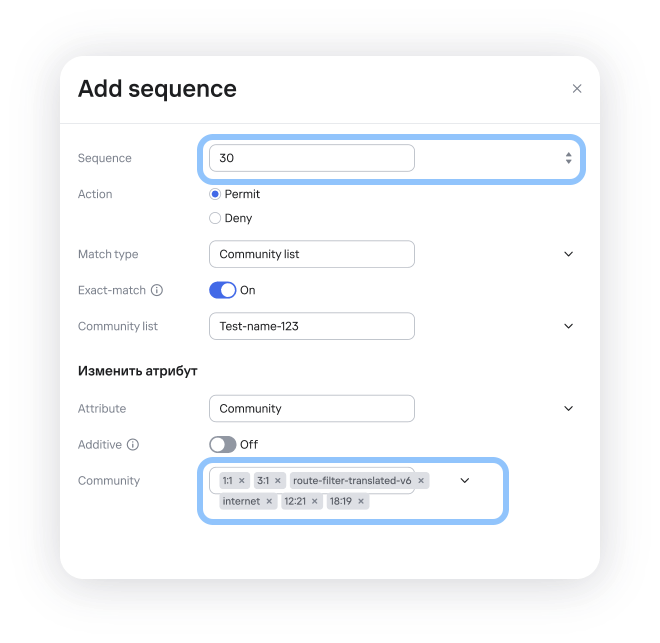
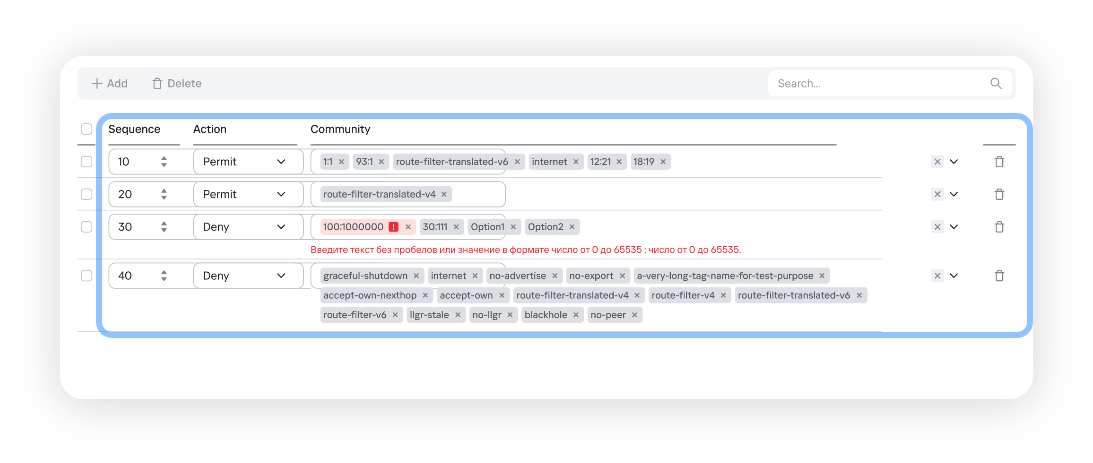
What we did:
- First of all, we decomposed all our files into smaller ones, which significantly increases the tool's performance.
- Then we published the design system libraries. The design system team migrated the materials from Figma to Pixso, structuring the process as a managed project with a focus on risk mitigation and zero downtime. The risks of failures during the transfer were mitigated by a phased approach. Problematic files were divided into smaller ones and uploaded sequentially.
As a result, the team successfully transferred over 100 design system files; all links and dependencies were restored in a short time, so the workflows and the use of the design system by product teams did not stop.
Stage 4: Developing a Strategy for the Future
Of course, we clearly understood that we were working with completely new software that has its own architectural features. For example, we found out quite quickly that Pixso has a slightly different approach to component nesting. For us, this meant the need to significantly revise and update the structure of most of our components.
Studying the mechanics of the platform, including the specifics of working with statuses and the technical synchronization of documentation, we realized that some processes would need to be optimized. Thus, the need to rebuild components to fit Pixso's logic gave us the opportunity to conduct a comprehensive audit of our processes, get rid of accumulated legacy (outdated solutions), and multiply the overall quality of the system.
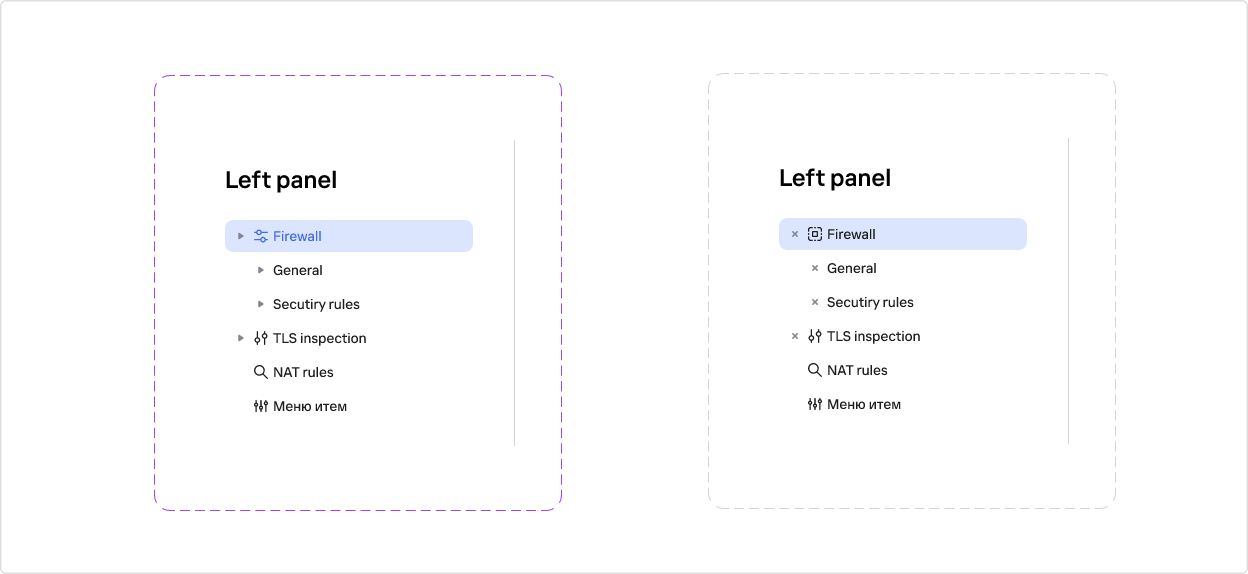
It is important to note that such nuances are revealed only in practice, which is natural for a large-scale migration. As a result, our transition transformed from a one-time rescue operation into a consistent process of systemic improvements and stabilization.
Now we face a significant volume of tasks for the architectural update of the design system. At the moment, we are forming an optimization strategy to use the mechanics built into Pixso as efficiently as possible. Our phased plan for implementing changes is aimed at unlocking the potential of the new tool and making Kaspersky's global design system even more robust, flexible, and scalable.
Postscript: Conclusions and the Value of Partnership
Looking back and evaluating the scale of the work completed in a matter of days without stopping development, we can confidently say: the transition was successful and became an important stage of professional growth for us. The team gained invaluable experience, and I would like to formulate a few fundamental conclusions:
- Processes determine stability more than tools do.
- A cohesive team is capable of effectively going through any transformations.
- A reliable technological partner is a key element of long-term stability.
Out of all the options available on the market, we chose Pixso as the tool suitable for our tasks. A very important factor turned out to be the following: the software developer is ready to evolve together with and for the customer, working collaboratively on improvements.
For us, as a company with a complex product architecture, the openness to dialogue, flexibility, and attentiveness of the Pixso team are especially valuable. Constant working interaction and the sincere readiness of the product to evolve along with our tasks, it is precisely this format of cooperation that allows building a stable long-term strategy. Of course, this is a mutually beneficial collaboration, we get the functionality we need, and the Pixso team gets hot feedback on the demand for updates.
Our case shows that with a systemic approach, mature risk management, and a strong team, even large-scale changes can become a point of growth.
Source links: From Migration to Collaboration: The Experience of Transitioning to Pixso