Scott
A product discovery to delivery workflow succeeds when evidence, decisions, design artifacts, review findings, and implementation context stay connected. The practical unit is not a meeting or a tool; it is a decision with an owner, an entry condition, and proof that the next team can proceed. This operating model follows one B2B saved-report feature from observed user friction to engineering handoff. Pixso serves as the shared design workspace for research boards, requirements, editable UI, design-system assets, comments, and delivery evidence. The team still owns product judgment, technical feasibility, accessibility, security, and release quality.
Part 1. Build the Workflow Around an Artifact Chain
A weak process names stages but leaves people to guess what each stage produces. A useful product discovery to delivery workflow defines five things for every stage: the question being answered, the accountable decision owner, the primary artifact, the exit evidence, and the next consumer. That structure turns a sequence of activities into a design workflow operating model. For teams that need to keep these decisions close to the work, the Pixso UX design collaboration workflow provides a shared place to review the related design context.
Use one example to make the model concrete. A B2B analytics team notices that analysts export the same reports every week because the product does not let them save a report view. The proposed feature must let a permitted analyst save a report, rename it, find it later, share it with eligible teammates, and recover when data cannot load. Discovery tests whether that problem matters. Delivery proves the approved behavior was implemented. Everything between those points should preserve the decision trail.
| Stage | Primary question | Artifact | Exit evidence |
|---|---|---|---|
| Discover | What problem and user behavior are real? | Evidence board and problem statement | Named user, task, evidence, and uncertainty |
| Decide | What will this release change? | Scope, assumptions, and decision-rights map | Approved boundary and owned risks |
| Design | How should the approved task appear and behave? | Flow, editable UI, components, and states | Requirements mapped to visible design evidence |
| Review | What prevents a responsible handoff? | Issue records and decision log | Blocking findings resolved or explicitly accepted |
| Deliver | Can engineering implement and verify the behavior? | Handoff package and implementation tests | Context, assets, constraints, and owners are clear |

Set an evidence threshold before a feature enters visual design
Discovery does not need a perfect research archive, but it does need enough evidence to prevent a preferred solution from becoming the problem statement. Before the team moves from discovery to scope, record a minimum evidence packet:
| Evidence | Decision it supports | What remains uncertain |
|---|---|---|
| Observed behavior | Who has the problem, in which context, and how often | Whether the same friction affects adjacent roles |
| Task boundary | What the release will let a user start, complete, or recover | Which edge case belongs in a later release |
| Constraint owner | Which policy, data, accessibility, or technical rule limits the design | What must be tested before implementation |
Keep the packet visible in the shared Pixso workspace and link it to the flow that the team is about to design. This creates a clean handoff from UX design collaboration to product decisions without pretending that early evidence answers every question.
Part 2. Discover the Problem with Evidence, Not Interface Ideas
Begin by collecting observations that describe current behavior: support conversations, search terms, analytics patterns, interview notes, workarounds, and technical constraints. Separate evidence from interpretation. “Analysts export the same filtered report every Monday” is an observation. “They need a star icon” is a solution hypothesis. A product discovery to delivery workflow should make the difference visible.
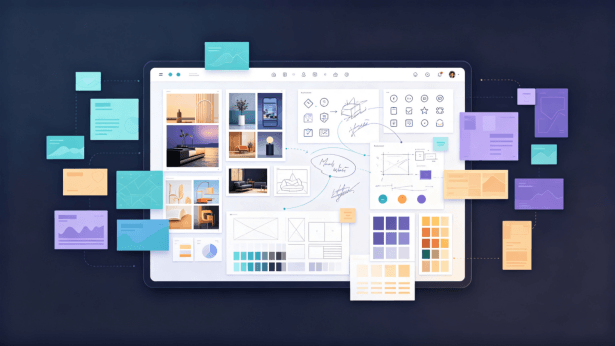
In the Pixso Whiteboard workspace, group evidence by user role, situation, friction, frequency, and confidence. Use a flowchart to show the current task and a PRD table to record what is known, assumed, and unanswered. Product, design, engineering, content, and operations can add comments in context instead of repeating the evidence across separate documents.
The discovery output is a decision-ready problem frame, not a polished concept. For the saved-report example, it should name the primary analyst, the repeated reporting task, the cost of rebuilding filters, the data sensitivity, the existing permission model, and the unknowns that still matter. Do not move forward because the idea sounds plausible; move when the team knows which behavior it needs to improve and what evidence would disprove the assumption.
Discovery exit check
- The affected role and recurring task are specific.
- Evidence is linked to its source and separated from hypotheses.
- The desired outcome describes changed user behavior, not a screen.
- Privacy, permission, data, and technical unknowns have owners.
- The team has agreed what it will learn or decide next.
Part 3. Decide Scope and Decision Rights Before High-Fidelity Design
Scope is where product design collaboration often becomes vague. Write what the release includes: save the current report configuration, name it, list saved reports, rename one, share according to existing permissions, and represent loading, empty, unavailable, service-error, and success states. Write the non-goals beside it: no new role model, no scheduled email delivery, no bulk migration, and no redesign of the reporting engine.
Assign ownership by decision rather than by department. Product owns the target outcome and release boundary. Design owns information hierarchy, interaction intent, and component use. Engineering owns data behavior, feasibility, authorization enforcement, and implementation tests. Content owns terminology and recovery messages. Security owns sensitive-data constraints. One person may hold several roles, but every high-risk decision needs one accountable owner.

A useful ownership record says who decides, who contributes evidence, who must be consulted, and what proves closure. For example, product decides which roles can share a report after engineering and security confirm the existing permission boundary. Design then shows the resulting states; implementation tests prove the server enforces them. This prevents a visual treatment from becoming an accidental policy decision.
Part 4. Convert Approved Requirements into Editable UI Direction
Map the task before composing screens. For the normal path: open a report, choose Save, enter a name, submit, receive confirmation, and find the report in the saved list. Add branches for duplicate names, slow submission, service failure, unavailable source data, insufficient sharing permission, empty results, and rename conflict. Each node should state the trigger, information shown, available action, system response, and recovery.
When rapid visual exploration would help, use the approved requirements and flow as input to Pixso AI. Ask for a structured, editable UI direction that includes the user role, task, required data, states, responsive targets, content limits, and exclusions. For example: “Create an editable saved-reports interface for a B2B analytics user. Include report name, owner, last updated date, sharing permission, loading, empty, unavailable, service-error, and saved states. Keep Save as the primary action and do not invent new permission roles.”
Pixso AI Design can create layered, editable UI output in the Pixso editor. Treat that output as a design hypothesis. Compare each frame with the scope, data contract, and state inventory. Remove invented metrics, actions, and permissions. Check accessibility intent, privacy, brand rules, component sources, responsive behavior, and content accuracy before the team accepts a direction.
Other Pixso AI tools can assist with targeted cleanup. Smart Layout applies Auto Layout to selected content, but it does not affect layers already using Auto Layout and is not available for a single selected layer or a Section. Smart Rename helps organize eligible layers while preserving custom names and excluding documented layer types. These tools can clarify hierarchy and file structure; they do not validate the product logic.
Part 5. Use a Shared Design System as a Decision System
A design system is more than a visual library. It stores repeated decisions in components, variants, styles, variables, tokens, and usage guidance. In the saved-report feature, the established button, text field, table row, status notice, menu trigger, dialog, and empty-state patterns should be reused when their meaning matches. An intentional exception should be documented rather than hidden in a local override.
Pixso supports shared components, styles, design tokens, team libraries, and design-system management in the collaborative workspace. Designers can connect the saved-report screens to the approved assets instead of recreating them. When a shared component changes, identify affected instances, review overrides, and inspect responsive behavior before accepting the update. Central reuse reduces drift; it does not remove the need for instance review.
The design workflow operating model should also define contribution rules. Specify who can publish a component, how a breaking change is named, what evidence a new variant needs, and how design tokens align with implementation. If a local solution repeats across products, record the pattern and evaluate it for the shared library. If it solves only one exceptional constraint, keep it local and explain why.
Part 6. Review with Issue Records and Evidence Gates
Run focused review passes. Product checks that the intended user task and scope are represented. Design checks hierarchy, states, content, responsive behavior, and system usage. Engineering checks data dependencies, permissions, failure handling, and implementation constraints. Content checks labels, messages, and localization. Security checks disclosure and access boundaries. This product design collaboration produces decisions, not a round of general opinions.
Use Pixso link sharing, real-time collaborative editing, comments, mentions, and on-canvas annotations to keep each finding beside the frame or requirement it concerns. A complete issue record contains the location, affected role, impact, severity, owner, and acceptance evidence. Avoid comments such as “fix this” or “looks odd”; they force the recipient to rediscover the problem.
| Gate | Example finding | Pass condition | Owner |
|---|---|---|---|
| Scope | Generated UI includes scheduled delivery, which is out of scope | Action removed from all frames and flow | Product |
| Permission | Viewer sees a share action reserved for owners | Read-only frame approved; role test defined | Product + engineering |
| Recovery | Service error offers no retry or preserved context | Retry behavior and safe retained data documented | Design + engineering |
| Accessibility | Status relies on color alone | Text or icon label added; implementation test assigned | Design + frontend |
| Content | “Report unavailable” does not explain the next action | Reason category and recovery copy approved | Content |

Define severity consistently. S1 blocks the main task or creates serious security, privacy, data, or accessibility risk. S2 causes substantial friction without a reliable workaround. S3 has limited impact and a practical workaround. A gate passes when all S1 findings are closed, S2 findings are closed or explicitly accepted by the accountable owner with a follow-up, and the required evidence is attached. The label alone is not evidence.
Part 7. Deliver Context That Engineering Can Verify
A design handoff is ready when an engineer can identify what is approved, what remains uncertain, and how success will be tested without reconstructing the project from chat. Organize frames by task and system state. Include the source components, variables, responsive rules, content limits, permission assumptions, data conditions, analytics events, decision log, and unresolved risks.
Pixso's developer workflow supports a shared link, layer specifications, code and asset access, Dev view, and on-canvas annotations. Use annotations for behavior that a static frame cannot express, such as whether a failed save preserves the report name or whether a retry is idempotent. Keep implementation questions attached to the relevant design evidence. This makes the shared design workspace useful to engineering instead of turning it into a screenshot repository.
When generated code is helpful, use the Pixso Design to Code (D2C) workflow to create React, Vue, HTML, ArkUI, or Flutter output for review and refinement. Treat it as scaffolding. Engineering still owns semantic markup, data integration, authorization, error handling, accessibility, analytics, tests, architecture, and production performance. A generated component does not prove the implemented behavior meets the acceptance criteria.
Design handoff exit check
- The approved task and all critical states have identifiable frames.
- Components and variables point to their maintained source.
- Permissions, content limits, data behavior, and responsive rules are explicit.
- Open risks have owners and do not masquerade as approved behavior.
- Design evidence and implementation tests are clearly distinguished.
- D2C output, when used, is labeled for engineering review rather than production release.
Part 8. Measure Workflow Health at the Handoffs
Measure the flow where one role depends on another. Useful signals include discovery-to-decision time, percentage of requirements with visible design evidence, unresolved questions at design handoff, review rework, repeated component exceptions, decision latency, and defects that escape into implementation. Do not celebrate a fast first design if engineering clarification and redesign increase afterward.

Use paired measures. Track time to a first editable direction alongside the percentage of required states represented correctly. Track component reuse alongside exceptions discovered after updates. Track fewer meetings alongside unresolved questions at handoff. A product discovery to delivery workflow improves when it reduces total uncertainty and rework, not simply when one stage finishes sooner.
After implementation, compare the design evidence with test results and user behavior. Which assumptions were wrong? Which states were missing? Which review comments repeated? Which shared components reduced effort? Update the Whiteboard template, decision-rights map, design-system guidance, and handoff checklist based on those findings. The design workflow operating model should evolve from evidence, not from a ceremonial retrospective.
Part 9. Avoid Common Operating-Model Failure Modes
Discovery becomes an idea board
Brainstorming is useful, but ideas without linked evidence should not be treated as validated needs. Label observations, assumptions, hypotheses, and decisions separately. Assign an owner and a next test to the uncertainty that could change scope.
The AI-generated screen becomes the specification
An editable UI direction can accelerate discussion, but it may invent content, permissions, metrics, or states. Keep the approved flow and requirement rows beside the frames. Review every generated element against them and remove unsupported behavior before it reaches developer handoff.
Comments replace decisions
A long comment thread is not a decision log. Close each material issue with the chosen action, accountable owner, acceptance evidence, and date. If the issue is accepted rather than fixed, record the risk and follow-up condition.
Handoff is treated as a single moment
Engineering input should begin during discovery and scope, not after the final frame. In a healthy product design collaboration model, technical and security constraints shape the design before polish. The final design handoff packages the already-shared decisions instead of introducing them for the first time.
Part 10. Adopt the Model with One Feature
Do not redesign the entire organization before trying the method. Choose one feature with a clear user task and moderate cross-functional risk. Create one Pixso Whiteboard file for evidence, scope, decision rights, and the flow. Connect the editable UI and design-system sources. Run one evidence-based review, build one complete design handoff package, and measure clarification and rework.
At the end, keep only the artifacts that changed a decision or reduced downstream uncertainty. A smaller design workflow operating model that people use is better than a comprehensive process they bypass. The shared design workspace should make the current truth easier to find, while product design collaboration should make responsibility clearer, not distribute it until nobody owns the outcome.
Conclusion
A dependable product discovery to delivery workflow connects evidence, scope, UI decisions, review findings, and implementation tests through explicit owners and exit conditions. Pixso can support that chain with Whiteboard planning, editable UI design, shared design-system assets, real-time collaboration, comments, annotations, developer tools, and D2C. The tool keeps the work visible; the operating model makes it accountable. Start with one real feature, require evidence at each handoff, and improve the model using rework, decision time, and escaped-defect data.